Watery blisters on the face
back to main page
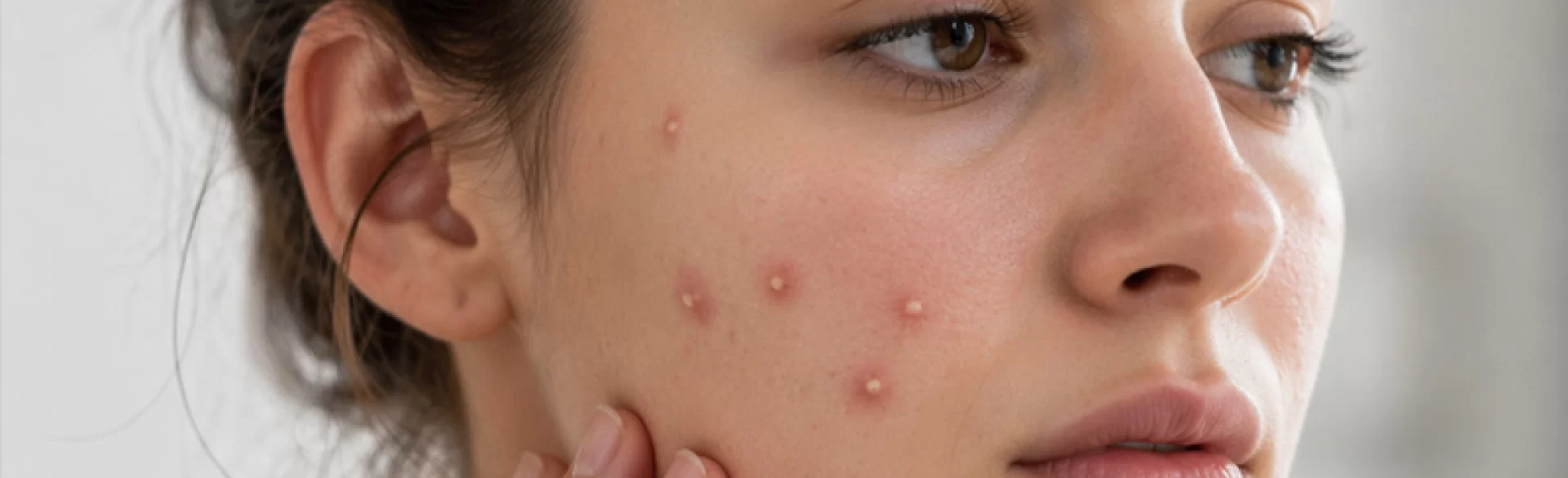
Watery bumps on the face are skin lesions of a vesicular nature (vesiculae), filled with transparent or slightly cloudy serous fluid. They occur as a result of damage to epidermal structures or an inflammatory skin reaction and can accompany dermatological diseases as well as viral, bacterial infections, or allergic reactions. In the clinical picture, they often take the form of small, tense vesicles, which may be accompanied by itching, burning, or pain. Their presence requires differentiation because the etiology of vesicular lesions is diverse – ranging from mild inflammatory conditions to diseases requiring specialist treatment.
Water blisters on the face - causes
The etiopathogenesis of vesicular lesions on the face is multifactorial and depends on the mechanism of skin barrier damage and the body's immune response. Vesicles form as a result of fluid accumulation in the intercellular spaces of the epidermis or at the dermo-epidermal junction.
The most common causes include:
1. Viral infections:
- herpes simplex virus (HSV-1) - causes clusters of painful vesicles, most commonly in the perioral area,
- varicella-zoster virus (VZV) - lesions can also involve the face,
- Coxsackie viruses - responsible for vesicular lesions in the course of infectious diseases.
2. Allergic reactions and contact dermatitis:
- contact with allergens (cosmetics, fragrances, metals),
- reactions to active ingredients of dermatological preparations,
- type IV hypersensitivity (delayed immune response).
3. Inflammatory dermatoses:
- eczema,
- atopic dermatitis (AD),
- dyshidrosis (dyshidrotic eczema), although it is less frequently localized on the face.
4. Physical and environmental factors:
- sunburns (photodermatoses),
- mechanical and chemical irritations,
- exposure to high temperature and humidity.
5. Bacterial infections:
- secondary superinfections of skin lesions, leading to the formation of blisters or pustules.
6. Autoimmune diseases (less common):
- pemphigus,
- pemphigoid - diseases with a more severe course requiring specialist diagnostics.
In clinical practice, it is important to consider the location of the lesions, the dynamics of their development, and accompanying symptoms, which allows for narrowing down the differential diagnosis.
Water blisters on the face - how to treat
Treatment of water-filled pustules on the face should be strictly dependent on the cause of their formation. Therapeutic management includes both causal and symptomatic treatment, aimed at restoring the integrity of the skin barrier and reducing inflammation.
Basic management principles:
- avoiding irritating cosmetics and chemicals,
- limiting manipulation of the lesions (not piercing the vesicles),
- using soothing preparations that rebuild the epidermal barrier (e.g., emollients).
Causal treatment:
- in viral infections - antiviral drugs (e.g., acyclovir for herpes),
- in bacterial infections - topical or systemic antibiotics,
- in allergic reactions - allergen elimination, topical glucocorticoids,
- in inflammatory dermatoses - calcineurin inhibitors, corticosteroids, immunomodulatory treatment.
Dermatological and procedural management:
In selected cases, especially with recurrent lesions or coexisting skin damage, procedures supporting regeneration are used:
- LED light therapy - anti-inflammatory effect and acceleration of healing,
- procedures using platelet-rich plasma (PRP) - stimulation of skin regeneration,
- needle mesotherapy - improvement of skin nutrition and reconstruction,
- gentle medical peels - supporting epidermal renewal (after active lesions have subsided),
- low-level laser therapy - reduction of inflammation and acceleration of regeneration.
In chronic, atypical, or treatment-resistant cases, in-depth dermatological diagnostics are necessary, and sometimes also immunological or microbiological tests.
Proper identification of the cause of the lesions is of key importance - symptomatic treatment without identifying the etiology can lead to recurrence or progression of the disease.

