Redness and erythema after summer - how to soothe overheated couperose skin?
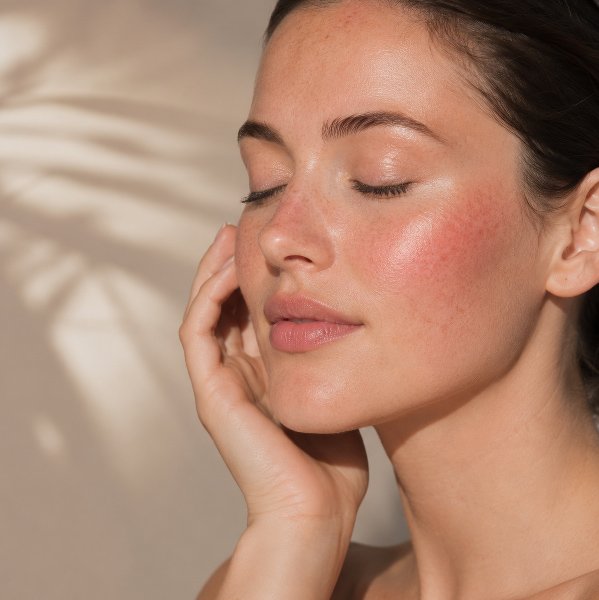
What happens to vascular skin after summer:
- UV breaks down the vascular scaffold – the loss of collagen and elastin deprives small vessels of support, making it harder for dilated capillaries to return to their normal state.
- Flushing and persistent erythema are two different conditions – the first subsides after several minutes, the second is also visible at rest.
- Skincare begins with the barrier – on overly dry epidermis, soothing ingredients work less effectively, even if well chosen.
- We tailor the protocol individually – at Ambasada Urody, we customize the approach to the type of lesions, their severity, and skin reactivity, using medical technologies that work deeply yet gently.
Table of contents
- Why does facial erythema worsen after summer?
- Transient redness vs. persistent erythema – the difference
- How to soothe overheated couperose skin after vacation?
- Vitamin K, rutin and panthenol – ingredients for redness
- What to avoid in couperose skin care?
- Which treatments close dilated capillaries?
- How to prevent the recurrence of erythema?
- Frequently asked questions about post-summer erythema
Why does facial erythema worsen after summer?
The worsening of erythema after the holidays is caused by the cumulative effect of several months of exposure: UV radiation breaks down collagen and elastin, and the weakened scaffolding stops supporting the walls of small blood vessels.
Several factors contribute to skin hyperreactivity at the same time:
- Solar radiation – heats the skin and accelerates the breakdown of supporting fibers.
- Air conditioning – dries the air and increases water loss from the epidermis.
- Gusty wind – irritates the thin epidermis and intensifies cheek redness.
- Temperature fluctuations – alternating dilation and constriction of blood vessels weakens their walls.
- Weakened hydrolipid barrier – allows water to escape and irritants to penetrate deep into the skin.
After the season, the compromised protective barrier stops retaining water in the epidermis. An overly dry face reacts more strongly to every stimulus, and erythema becomes persistent and darkens.
Transient redness vs. persistent erythema – the difference
Sudden flushing after emotions, a workout, or a hot meal is a temporary state in which the vessels return to their original diameter. The problem begins when the vessel stops returning to its baseline diameter.
Five criteria distinguish the two states:
Criterion | Transient redness | Persistent erythema |
Duration | Subsides within several minutes | Visible also at rest, for weeks |
Vessel behavior | Returns to baseline diameter | The wall loses elasticity, the vessel remains dilated |
Appearance on the skin | Diffuse redness of the cheeks and neck | Distinct spider veins in fixed locations |
Role of the stimulus | Triggers the entire reaction from scratch | Exacerbates an already present change |
Management | Simply removing the stimulus is sufficient | Vessel-closing treatments are needed |
The most advanced stage of vascular changes can be rosacea – a chronic skin disease that progresses in stages: from periodic erythema and burning, through dilated capillaries and papules, to advanced inflammatory lesions. It has a recurrent nature and reacts strongly to temperature, UV radiation, alcohol, stress, and spicy foods, which is why it requires treatment under the supervision of a specialist.
How to soothe overheated couperose skin after vacation?
Overheated couperose skin is calmed in stages: first, the irritation subsides, then the barrier is rebuilt, and finally, blood vessel-strengthening ingredients are introduced.
The order of steps is as follows:
- Lower the skin temperature – lukewarm water instead of hot, no saunas and long showers.
- Limit skincare to a minimum – gentle cleansing and one soothing product instead of five active ones.
- Rebuild the hydrolipid barrier – ceramides and ectoine act as a binder between cells, and hyaluronic acid binds water.
- Add calming ingredients – panthenol and allantoin reduce burning and support the healing of micro-irritations.
- Return to exfoliation at the end – enzymatic peels instead of granular scrubs, which irritate fragile capillaries.
Vitamin K, rutin and panthenol – ingredients for redness
After the summer season, the most important task in skincare is sealing blood vessel walls – this is what prevents the formation of further spider veins.
Vessel-strengthening ingredients work well in a daily routine:
- Vitamin K – supports the skin in dealing with micro-injuries and visible petechiae.
- Bioflavonoids – rutin, diosmin, and hesperidin improve the tightness of small vessels.
- Vitamin C with niacinamide – even out skin tone and calm the tendency to redness.
- Azelaic acid – soothes erythema and inflammatory lesions, also in reactive skin.
- D-panthenol and gluconolactone – accelerate regeneration and moisturize without weighing the skin down.
- Horse chestnut and arnica extracts – improve microcirculation in the superficial layers of the skin.
What to avoid in couperose skin care?
In the care of couperose skin, the main priority is to avoid anything that dilates blood vessels and irritates the thin epidermis. Products containing ethyl alcohol, menthol, and intense fragrances should be removed from your makeup bag, and strong AHA acids are worth replacing with gentler forms of exfoliation. Replace a rough towel with a soft cloth and dry your face by patting gently, without rubbing.
The second group of triggers acts from the outside and the inside: hot water, saunas, and tanning beds dilate capillaries in a matter of minutes, while spicy seasonings—led by chili—and alcohol trigger sudden flushing. Limiting these stimuli provides skincare with a starting point – only then do redness-calming creams and serums work the way they should.
Which treatments close dilated capillaries?
Dilated capillaries are closed by treatments based on selective photothermolysis: light energy is absorbed by hemoglobin, and the vessel wall undergoes controlled coagulation and shrinkage.
In the clinic, several technologies are used for vascular lesions:
- Nd:YAG 1064 nm laser – selectively removes telangiectasias and reduces persistent erythema in areas where individual capillaries are visible.
- MaxG and Alma Dye-VL vascular photorejuvenation – narrow light spectra target erythema and capillaries, while simultaneously stimulating collagen synthesis, which strengthens and thickens vascular skin.
- IPL vascular phototherapy – pulses absorbed by hemoglobin and melanin reduce erythema, capillaries, and inflammation.
- INDIBA MED – capacitive-resistive radiofrequency reduces inflammation, improves microcirculation, and restores balance to the skin.
- Azelaic and lactobionic peels – reduce erythema without irritation, and for thin skin that poorly tolerates chemicals, their role is taken over by Environ ionopeels.
The choice of method depends on the form of the lesions: diffuse erythema responds better to vascular photorejuvenation, individual dilated capillaries to the laser, and the inflammatory phase with papules to soothing treatments and anti-inflammatory peels. Recovery after the treatment lasts from a few days to a few weeks, depending on the size and depth of the lesions, and the date of the first session is determined after assessing the skin condition and ruling out contraindications.
How to prevent the recurrence of erythema?
Recurrence of erythema is prevented by year-round prophylaxis, where UV protection takes first place. Daily use of a high-SPF cream makes sense even on cloudy days, because radiation weakens blood vessel walls all year round. In autumn, this is joined by protection against frost and wind, as well as avoiding sudden temperature spikes.
The rest of the work is done by daily habits: berries and citrus fruits in the diet support the integrity of blood vessel walls, while the systematic rebuilding of the hydrolipid barrier and gentle cosmetics prolong the effects of in-office visits.
Not sure whether yours is still just a flush or already persistent erythema? This exact question can be resolved on the spot, right away – we invite you for a free consultation!
Frequently asked questions about post-summer erythema
When after vacation can vascular treatments be planned?
The appointment is determined by the condition of the skin after completed sun exposure. In the case of a fresh tan, light-based treatments are postponed because melanin competes for energy with hemoglobin in the vessel.
Can makeup mask erythema without harming the skin?
Makeup does not worsen the condition of capillaries if you reach for lightweight formulas and remove them gently. Makeup removal usually does the most damage: vigorous rubbing with a cotton pad irritates the epidermis more than the cosmetic itself.
Does post-summer erythema affect only the face?
Vascular changes appear wherever the skin is thin and heavily exposed to the sun, also on the décolletage, neck, and legs. It is worth covering these areas with the same protection as the face.
How to prepare for the first visit with an erythema problem?
For a week before the consultation, write down in which situations flushing occurs: after a meal, exercise, stress, or a temperature change. Also prepare a list of cosmetics used and medications taken.

