Facial redness
back to main page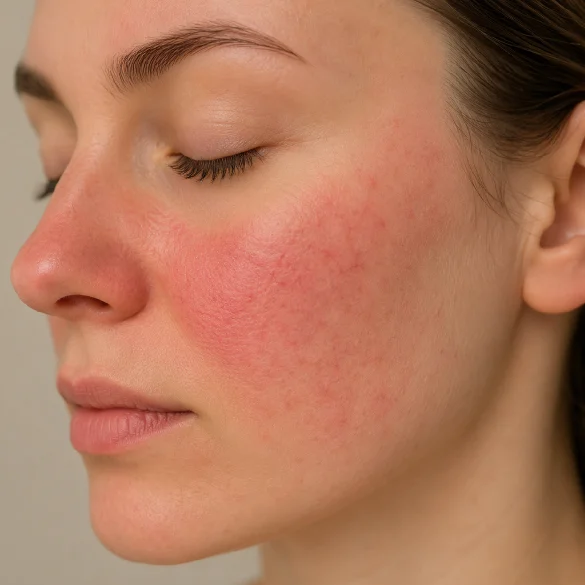
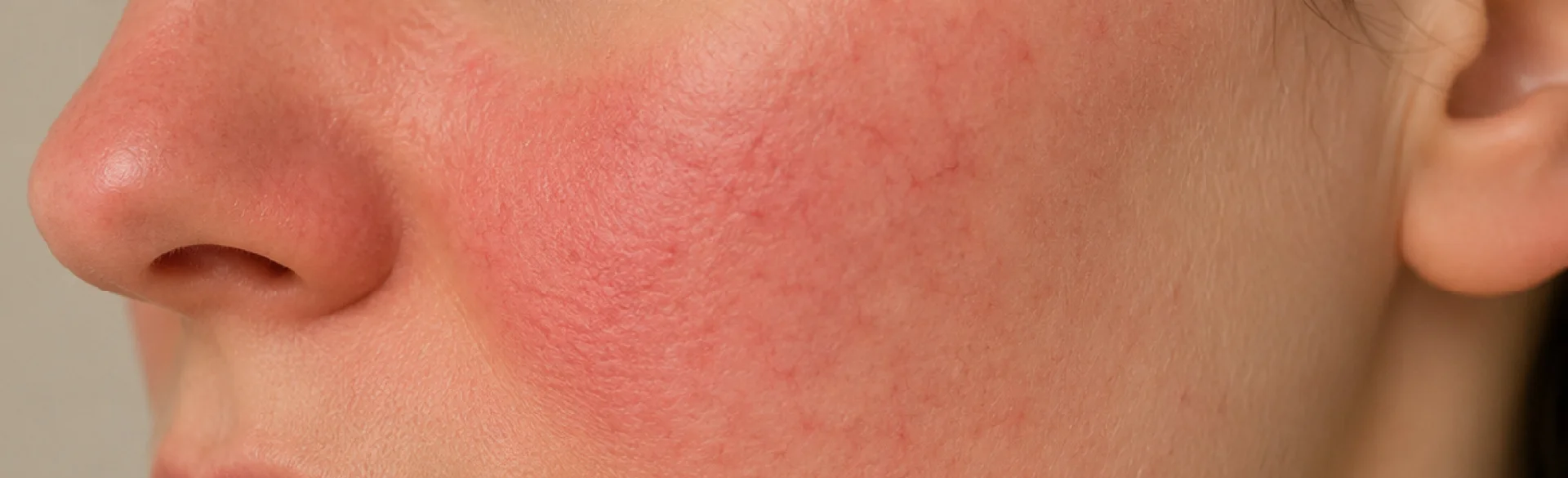
Facial erythema is a clinical symptom consisting of transient or persistent skin redness, resulting from the dilation of superficial blood vessels of the dermis. It can be a physiological response of the body to emotions, physical exertion, or high temperature, but it is equally often a manifestation of chronic dermatological, vascular, or systemic diseases. Depending on the cause, erythema can be paroxysmal or persist constantly, affecting the cheeks, nose, chin, forehead, or the entire face. In diagnostics, the duration of the lesions, the presence of telangiectasias (permanently dilated capillaries), papules, pustules, and factors triggering the redness are of significant importance. Early diagnosis of the cause allows for the implementation of appropriate treatment and limits the progression of vascular changes.
Facial erythema - types
Facial erythema is not a distinct disease entity, but a symptom occurring in many physiological and pathological conditions. In dermatological practice, several of its forms are distinguished.
Transient erythema (flushing) appears suddenly and subsides after a few minutes or hours. It is associated with short-term dilation of blood vessels. It may occur after:
- physical exertion,
- alcohol consumption,
- hot beverages,
- spicy foods,
- strong emotions,
- exposure to high or low temperatures.
Persistent erythema persists for a long time and indicates chronic dilation of skin blood vessels. It often coexists with telangiectasia and skin hypersensitivity.
The most common forms of erythema include:
- vasomotor erythema,
- erythema associated with rosacea,
- erythema accompanying skin photodamage,
- post-inflammatory erythema,
- drug-induced erythema,
- erythema in the course of autoimmune diseases (e.g., systemic lupus erythematosus).
From a pathophysiological standpoint, a key role is played by impaired regulation of vascular tone, chronic inflammation, and damage to the walls of small skin blood vessels.
Erythema on the face - causes
The etiology of erythema is multifactorial. In some people, genetic predisposition associated with greater vascular reactivity dominates, while in others, environmental factors and chronic inflammation play the main role.
The most common causes include:
- vascular skin,
- rosacea,
- chronic exposure to UV radiation,
- frequent temperature changes,
- epidermal barrier disorders,
- chronic stress,
- alcohol consumption,
- spicy diet,
- hot drinks,
- certain vasodilating drugs,
- autoimmune diseases,
- hormonal disorders.
A significant role is also played by chronic stimulation of the nervous system responsible for regulating vessel diameter. In people with vascular skin, even minor stimuli can trigger rapid skin congestion.
Additionally, chronic inflammation leads to the degradation of collagen fibers surrounding blood vessels. Consequently, they lose mechanical support, become less elastic, and over time remain permanently dilated.
Facial redness - transient vs. chronic - when is it a problem
Not every erythema requires treatment. Short-term redness after exertion or high temperature is a normal physiological reaction of the body.
Concern should be raised by situations when:
- erythema persists for many hours or constantly,
- redness appears increasingly often,
- fine blood vessels become visible,
- burning or a sensation of hot skin occurs,
- papules and pustules appear,
- cosmetics cause severe irritation,
- erythema covers an increasingly larger area of the face.
Chronic erythema indicates permanent microcirculation disorders and requires dermatological diagnostics. This is because long-term vasodilation leads to their remodeling and the formation of permanent vascular changes.
In diagnostics, the doctor assesses, among other things:
Feature | Transient erythema | Chronic erythema |
|---|---|---|
Duration | minutes to hours | weeks or years |
Vessels | invisible | often visible telangiectasias |
Inflammation | usually absent | often present |
Risk of progression | low | high |
Need for treatment | usually no | most often yes |
The earlier appropriate therapy is implemented, the greater the chance of inhibiting the development of permanent vascular changes.
Facial redness - connection with rosacea and telangiectasia
Erythema is one of the earliest symptoms of rosacea and often precedes the appearance of inflammatory lesions by up to several years.
In the initial stage of the disease, the redness is paroxysmal. Over time, the dilation of capillaries becomes permanent, resulting in telangiectasias, which are fine, red or purple blood vessels visible under the skin.
The chronic inflammatory process then leads to the development of:
- papules,
- pustules,
- skin edema,
- hyperreactivity of nerve endings,
- a burning and stinging sensation.
Erythema does not always mean rosacea, however, in people with chronic redness, the risk of developing this disease is significantly higher.
Erythema should also be distinguished from isolated telangiectasias. Telangiectasias are a permanent dilation of capillaries, whereas erythema is a diffuse redness resulting from skin hyperemia. Both phenomena very often coexist and mutually intensify each other.
Facial redness - vascular treatments and IPL
Treatment of erythema depends on its cause, severity, and the presence of permanent vascular changes. The basis of therapy is proper skin care, elimination of triggering factors, and treatment of the underlying disease.
In the case of persistent erythema, treatments utilizing the phenomenon of selective photothermolysis, which involve the selective closure of pathologically dilated blood vessels without damaging the surrounding tissues, show the greatest effectiveness.
The most commonly used methods include:
- pulsed dye laser (PDL),
- KTP lasers,
- Nd:YAG lasers with appropriately selected parameters,
- intense pulsed light (IPL),
- comprehensive therapies combining vascular technologies with the reconstruction of the skin barrier.
IPL (Intense Pulsed Light) technology is widely used in the treatment of diffuse erythema and early vascular changes. The emitted light pulses are absorbed by the hemoglobin in the blood, leading to the controlled closure of small vessels. The result of the therapy is a gradual reduction of redness, improvement of skin tone, and reduction of erythema episodes.
The best results are achieved after a series of treatments, combined with adhering to the rules of vascular skin care, which include daily photoprotection, reconstruction of the hydrolipid barrier, and avoiding factors that exacerbate vasodilation.

