Exudative psoriasis
back to main page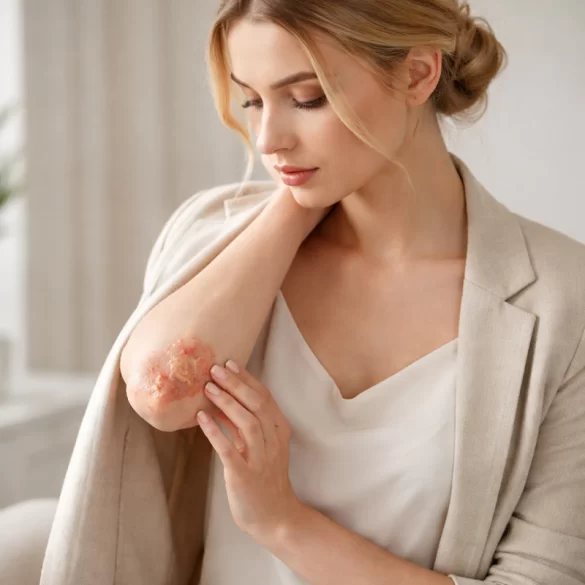
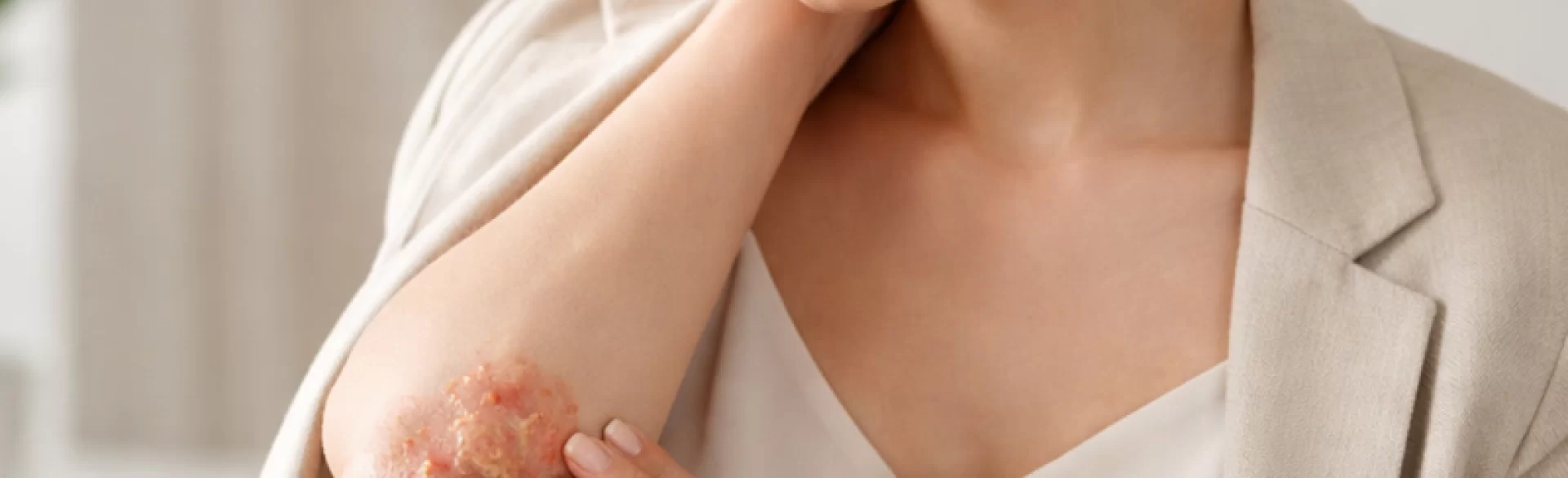
Łuszczyca wysiękowa to szczególna postać łuszczycy (łac. psoriasis exsudativa), w której oprócz typowych dla choroby zmian zapalnych skóry pojawia się obfity wysięk surowiczy oraz strupy powstające w wyniku przesiąkania płynu zapalnego przez uszkodzony naskórek. Jest to wariant łuszczycy związany z intensywnym stanem zapalnym skóry i zaburzeniami bariery naskórkowej. Zmiany najczęściej lokalizują się w miejscach narażonych na wilgoć, tarcie i macerację skóry, takich jak fałdy skórne, pachwiny, okolice pod piersiami czy okolica anogenitalna. Choroba może przebiegać z nasilonym świądem, pieczeniem oraz wtórnymi nadkażeniami bakteryjnymi lub grzybiczymi. Łuszczyca wysiękowa wymaga odpowiedniego leczenia dermatologicznego, ponieważ jej przebieg bywa bardziej uciążliwy niż w klasycznej postaci łuszczycy plackowatej.
Exudative psoriasis – causes
Like other forms of psoriasis, exudative psoriasis is a chronic immunologically mediated disease in which disturbances in immune system function and in the proliferation processes of keratinocytes, i.e., epidermal cells, play a key role. In the course of the disease there is excessive activation of T lymphocytes and increased production of inflammatory mediators such as interleukins (IL-17, IL-23) and tumor necrosis factor alpha (TNF-α).
The most important factors favoring the development of exudative psoriasis include:
Genetic factors
- occurrence of psoriasis in family members,
- predispositions related to specific human leukocyte antigens (e.g., HLA-Cw6).
Environmental factors
- chronic skin irritation and friction in skin folds,
- excessive skin moisture and maceration of the epidermis,
- skin injuries (the so-called Koebner phenomenon).
Systemic factors
- obesity,
- diabetes,
- metabolic disorders,
- chronic bacterial or fungal infections.
Additionally, disease exacerbations may be triggered by certain medications (e.g., beta-blockers, lithium), psychological stress, as well as sudden hormonal changes. In exudative psoriasis, damage to the epidermal barrier is of particular importance, as it promotes the seepage of inflammatory fluid and the formation of moist skin lesions.
Exudative psoriasis – diagnostics
The diagnosis of exudative psoriasis is based primarily on a clinical skin examination performed by a dermatologist. The physician assesses the nature of the inflammatory lesions, the presence of exudate, the location of the disease foci, and typical features of psoriasis, such as well-demarcated erythematous plaques or a chronic, relapsing course. In many cases dermatoscopic examination is also helpful, allowing a more precise assessment of the microstructure of skin lesions.
Because of the presence of moist inflammatory foci and crusts, exudative psoriasis can resemble other dermatological diseases. In the differential diagnosis one should primarily consider:
- contact dermatitis (eczema) – especially in the case of lesions in skin folds,
- seborrheic dermatitis, which can also cause erythematous-scaling lesions,
- fungal infection of the skin folds, particularly in the groin area and under the breasts,
- bacterial skin infection presenting with exudate and crusts,
- inverse psoriasis (intertriginous psoriasis), which occurs in similar locations.
In diagnostically ambiguous situations the physician may order additional tests, such as:
- microbiological tests for bacterial or fungal infections,
- skin histopathological examination (biopsy), which allows assessment of characteristic changes in the structure of the epidermis and dermis.
Accurate diagnosis is important because therapeutic management of psoriasis differs significantly from the treatment of infectious or allergic diseases that can produce a similar clinical picture.
Exudative psoriasis – symptoms
The clinical picture of exudative psoriasis differs from classic plaque psoriasis primarily by the presence of moist inflammatory lesions and crusts formed from dried exudate. Skin lesions usually present as well-demarcated inflammatory patches with intense redness.
The most commonly observed symptoms are:
- erythematous inflammatory skin lesions,
- abundant serous exudate from the surfaces of lesions,
- formation of yellowish or brown crusts,
- erosions resulting from damage to the epidermis,
- intense itching and burning of the skin,
- a tendency to secondary bacterial or yeast infections.
Lesions most commonly occur in areas of increased skin moisture, such as:
- inframammary folds,
- the groin,
- axillary regions,
- the buttock and anogenital area,
- joint flexures.
Unlike typical plaque psoriasis, the scale may be less visible because it is softened by the exudate. For this reason, lesions can resemble other dermatological conditions, including:
- contact dermatitis,
- seborrheic dermatitis,
- cutaneous fungal infections,
- lichen simplex chronicus.
For this reason, dermatological diagnostics are often necessary, including clinical examination, dermatoscopy, and sometimes microbiological tests to exclude superinfections.
Exudative psoriasis – treatment
Treatment of exudative psoriasis is multi-stage and individually tailored to disease severity. The goal of therapy is to reduce inflammation, limit exudation, and restore the epidermal barrier.
The basis of treatment is topical therapy, which includes:
Anti-inflammatory agents
- topical glucocorticoids,
- calcineurin inhibitors (e.g., tacrolimus, pimecrolimus).
Keratolytic and anti-psoriatic agents
- vitamin D derivatives (calcipotriol),
- salicylic acid preparations,
- dermatological tar preparations.
Supportive treatment
- agents to dry exudative lesions,
- antiseptics to prevent superinfections,
- emollients that restore the skin's hydrolipidic barrier.
In cases of extensive or refractory lesions, systemic treatment is also used, such as:
- methotrexate,
- cyclosporine,
- oral retinoids,
- modern biologic drugs that block inflammatory cytokines (e.g., IL-17 or IL-23 inhibitors).
Phototherapy also plays an important role, especially:
- 311 nm UVB therapy,
- PUVA photochemotherapy.
Contemporary dermatology also uses technologies applied in aesthetic medicine and procedural dermatology that support the treatment of inflammatory lesions and skin regeneration. In clinical practice, among others, the following are used:
- LED light phototherapy,
- dermatologic laser therapy, including the neodymium-YAG laser,
- regenerative and anti-inflammatory skin procedures that support reconstruction of the epidermal barrier.
Regardless of the therapy used, care and preventive measures are also very important, including:
- keeping the skin clean and dry,
- using gentle dermocosmetics,
- weight reduction in individuals with obesity,
- avoiding irritating cosmetics and mechanical irritation of the skin.
Exudative psoriasis is chronic and relapsing, so effective treatment requires ongoing dermatological follow-up and long-term therapeutic management.

