Postoperative scars
back to main page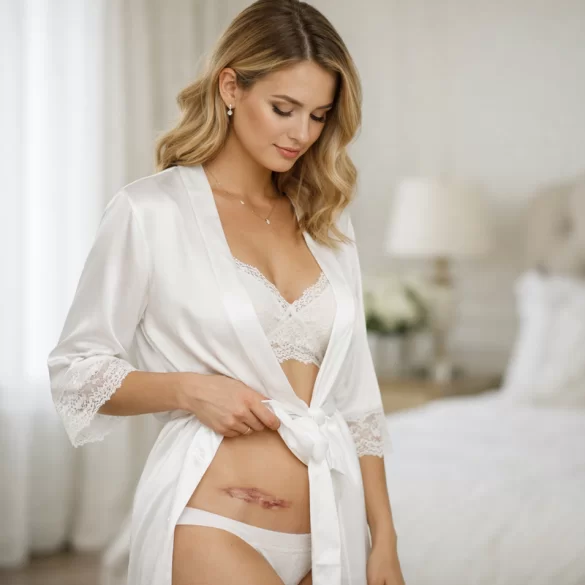

Postoperative scars are changes in the structure of the skin that develop at the site of a surgical incision. They are a natural result of the wound healing process after surgical procedures and represent the final stage of regeneration of the damaged dermis. Within them, collagen is remodeled, new connective tissue forms, and blood vessels are reorganized. The appearance and character of a scar depend on many factors, such as the surgical technique, skin tension, wound location, genetic predispositions, and the way the wound is cared for after the procedure. In most cases scars gradually fade and become less visible; however, in some patients they may take the form of hypertrophic or atrophic changes or keloids that require dermatological or procedural treatment.
Postoperative scars – types
Postoperative scars differ in appearance and structure depending on the course of the healing process and the body's reaction to surgical trauma. In dermatology, several basic types of scars that develop after surgeries are distinguished.
The most common types of postoperative scars are:
- Normal (normotrophic) scars – are flat, soft and have a color similar to the surrounding skin. They arise as a result of a normal wound healing process and usually become less noticeable over time.
- Hypertrophic scars – are thickened and raised above the level of the skin, but remain within the boundaries of the original wound. They result from excessive collagen production during the remodeling phase of the scar.
- Keloids – are firm, irregular lesions that extend beyond the borders of the original wound and may enlarge over many months or years. They are often accompanied by itching, pain or a feeling of tightness.
- Atrophic scars – occur less frequently after surgical procedures, but may appear as a result of disturbed skin regeneration. They are characterized by a depression relative to the surrounding tissues.
The nature of a scar is also influenced by local factors such as wound location, skin tension in a given body area, postoperative infection and the duration of the healing process. Systemic factors also play an important role, including the patient's age, metabolic diseases, hormonal disorders and genetic predisposition to keloid formation.
Postoperative scars – treatment
Treatment of postoperative scars depends on their type, size, time since formation and the symptoms reported by the patient. The best therapeutic results are achieved when management begins at an early stage of wound healing, before an abnormal scar structure becomes established.
A basic element of therapy is prevention of abnormal scarring, which includes proper wound care, avoidance of excessive skin tension and protection from UV radiation. In the first months after surgery silicone preparations, compression dressings and scar massage are often used.
In the case of hypertrophic scars or keloids more advanced treatment methods are used, such as:
- intralesional glucocorticosteroid injections into the scar, which reduce collagen production,
- injections of antifibrotic agents, e.g. 5-fluorouracil,
- laser therapy, improving the structure and color of the scar,
- microneedling, stimulating collagen remodeling,
- surgical scar correction in cases of extensive lesions or those functionally limiting movement.
The scar remodeling process is prolonged and can last even 12–24 months. During this time there is reorganization of collagen fibers and a gradual reduction in the vascularity of the scar tissue.
Postoperative scars – treatments
Contemporary dermatology and aesthetic medicine offer many methods to improve the appearance of postoperative scars. These treatments aim to soften scar tissue, smooth its structure, improve skin elasticity and even out skin tone.
The most commonly used procedures include:
Laser therapy
Laser treatment of scars involves the controlled application of light energy to scar tissue. Fractional lasers and vascular lasers create micro-injuries in the skin that stimulate regenerative processes and collagen remodeling. As a result, the scar becomes more elastic and less visible.
The procedure combines skin microneedling with the action of radiofrequency waves. Thermal energy reaches the dermis, stimulating fibroblasts to produce new collagen and elastin. This method is particularly useful in treating hypertrophic scars and scars with an uneven surface.
Microneedling (microneedling)
It involves creating controlled micro-injuries to the skin using very thin needles. The procedure activates the skin's natural regenerative processes and stimulates collagen remodeling.
Medical peels
Chemical peels used in scar treatment cause controlled exfoliation of the epidermis and stimulate regenerative processes in the deeper layers of the skin.
In clinical practice the best results are achieved with combined therapy, in which several methods are used simultaneously or sequentially. The range of procedures used in scar treatment includes, among others:
- laser scar removal
- radiofrequency microneedling
- regenerative mesotherapy
- skin microneedling
- medical peels
The choice of method depends on the type of scar, its age and the patient's individual predispositions.
Postoperative scars – ointments
Topical preparations are an important element in the treatment and prevention of postoperative scars. Their action is primarily focused on moisturizing the skin, reducing excessive collagen production, and improving the elasticity of scar tissue.
The most commonly used substances include:
- medical silicones – available in the form of gels and silicone sheets; they create a protective layer on the skin surface that reduces water loss and regulates the collagen remodeling process
- onion extract (Allium cepa) – exhibits anti-inflammatory and anti-fibrotic effects
- heparin – improves microcirculation and reduces swelling within the scar
- allantoin – accelerates epidermal regeneration and soothes
These preparations are best used after the wound has completely healed, usually after suture removal and epidermal closure. Topical therapy should be continued for several months, as the scar remodeling process is lengthy.
It is worth emphasizing that ointments and gels can improve the appearance of early scars, whereas in the case of established or hypertrophic scars procedural methods are often necessary.

