Fat loss
back to main page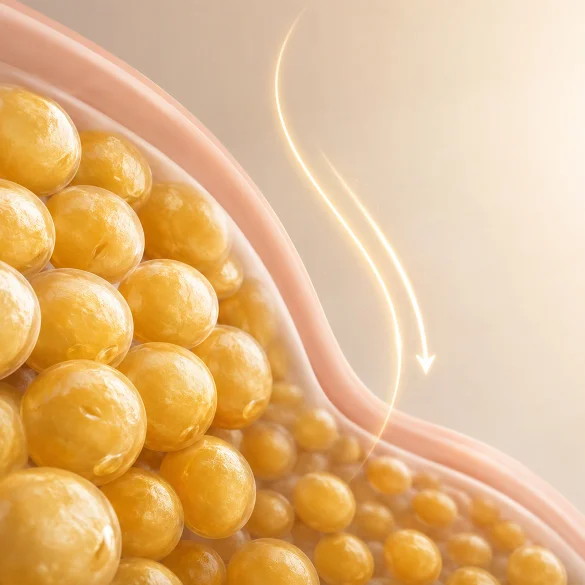
Loss of adipose tissue is a process of reducing the volume of adipocytes, i.e., fat cells, or reducing their number in the body. It can occur physiologically during weight loss, physical activity, and caloric deficit, but also pathologically, e.g., in the course of metabolic, neoplastic, or hormonal disorders. Adipose tissue performs far more functions than just energy storage. It is responsible for thermal insulation, protection of organs, hormone production, and maintaining the correct proportions of the body shape and facial volume. The rate and manner of adipose tissue loss affect not only body weight, but also skin condition, tissue tension, and the overall aesthetic appearance of the body.
Fat loss - what it is
Adipose tissue is a specialized connective tissue composed mainly of adipocytes storing triglycerides. In the human body, subcutaneous and visceral adipose tissue are primarily distinguished. Physiological loss of adipose tissue involves the gradual utilization of stored energy by the body in situations of increased energy demand or restricted caloric intake.
This process can affect the entire body or selected anatomical areas. In clinical practice, it is observed that fat reduction does not occur evenly. Some areas, such as the face, buttocks, or breasts, may lose volume faster than areas with greater metabolic resistance, e.g., the lower abdomen or lateral parts of the trunk.
Loss of adipose tissue can be:
- physiological – related to diet and physical activity,
- hormonal – e.g., in the course of menopause or hyperthyroidism,
- pharmacological – among others, during therapy with GLP-1 agonists,
- pathological – e.g., in cancer, chronic diseases, or lipodystrophy.
In aesthetic medicine, the loss of facial subcutaneous fat is of particular importance because it leads to changes in proportions and accelerates visible signs of aging.
Fat loss - how it works
The process of fat reduction begins when a negative energy balance occurs. The body, not receiving enough energy from food, starts to use stored fat reserves as a source of metabolic fuel.
In the first stage, lipolysis is activated, which is the breakdown of triglycerides located in adipocytes. The resulting free fatty acids and glycerol enter the bloodstream and are then used by muscles, the liver, and other tissues for energy production.
The rate of fat loss depends on many factors:
- age,
- sex,
- hormone levels,
- muscle mass,
- physical activity,
- sleep quality,
- stress levels,
- genetic predisposition.
The rate of weight loss is also important. Rapid weight loss often leads to a quick reduction in the volume of subcutaneous tissue without the possibility of proper adaptation of the skin and supporting ligaments. As a result, laxity, tissue hollowing, and deterioration of facial and body contours occur.
It is worth emphasizing that the body does not reduce fat locally in a controlled manner. The popular concept of “burning fat from one area” is not fully supported physiologically. The distribution and rate of fat loss are mainly regulated hormonally and genetically.
Fat loss - biological mechanism
The biological mechanism of fat loss is primarily based on hormonal and enzymatic regulation. A key role is played by hormones affecting adipocyte metabolism, including:
- insulin,
- glucagon,
- adrenaline,
- noradrenaline,
- cortisol,
- leptin,
- ghrelin.
In a state of energy deficit, insulin levels decrease, while the activity of hormones stimulating lipolysis increases. This leads to the activation of hormone-sensitive lipase (HSL), the enzyme responsible for the breakdown of triglycerides stored in fat cells.
Free fatty acids are transported to the mitochondria, where they undergo beta-oxidation, which is the process of burning fat to obtain ATP – the primary carrier of cellular energy.
An important element is also the body's metabolic adaptation. With prolonged calorie restriction, the body may:
- lower the metabolic rate,
- reduce energy expenditure,
- increase the feeling of hunger,
- increase energy storage after ending the diet.
It is this mechanism that is partly responsible for the yo-yo effect and difficulties in maintaining weight loss.
In recent years, particular attention has also been paid to the impact of incretin drugs, such as semaglutide or tirzepatide. They cause a decrease in appetite and rapid fat loss, however, at a significant rate of reduction, they can lead to a loss of facial volume and pronounced aesthetic changes colloquially referred to as “Ozempic face”.
Fat loss and skin appearance - impact
Adipose tissue plays an important supporting role for the skin. It is responsible for tension, softness, and maintaining tissue volume. Its reduction directly affects the appearance of the skin of both the face and body.
With gradual fat loss, the skin has a greater ability to adapt. Fibroblasts can partially remodel collagen and elastin fibers, thanks to which skin tension remains relatively preserved.
Rapid loss of adipose tissue, on the other hand, leads to:
- skin laxity,
- deterioration of the facial contour,
- loss of firmness,
- worsening of wrinkles,
- sunken cheeks,
- sagging of tissues,
- prominence of bone structures.
These changes are particularly visible in people:
- over 40 years of age,
- with thin skin,
- with low collagen levels,
- after intensive reduction diets,
- after rapid weight loss.
On the body, deterioration of skin tension also frequently occurs on the abdomen, arms, thighs, and buttocks. The lower the regenerative capacity of the skin, the greater the risk of persistent laxity after completing weight loss.
In aesthetic medicine, procedures supporting skin remodeling and improving tissue quality are used, including:
- biostimulating treatments,
- microneedle radiofrequency,
- HIFU,
- tissue stimulators,
- fractional laser therapy,
- treatments improving facial volume,
- body firming technologies.
Loss of fat tissue - aesthetic effects
The aesthetic effects of fat loss depend on the patient's age, skin quality, the location of fat reduction, and the dynamics of the process. In some individuals, fat reduction improves body proportions and facial features; however, excessive or rapid volume loss can lead to unfavorable changes in appearance.
The most commonly observed aesthetic effects include:
- sunken cheeks,
- deepening of the tear trough,
- sagging jawline,
- loss of facial contour,
- “empty” face,
- skin laxity,
- sagging arms and thighs,
- sagging buttocks,
- loss of breast firmness.
Within the face, the reduction of subcutaneous fat accelerates gravitational aging. Tissues lose support, and the ligaments holding the facial structures gradually become overloaded. As a result, the face may look tired, older, and more gaunt despite a normal body weight.
Modern aesthetic medicine focuses not only on fat reduction but also on maintaining harmonious proportions of the face and body. Therefore, a controlled rate of weight loss and simultaneous support for the quality of the skin and supporting tissues are of growing importance.

