Inframammary fold
back to main page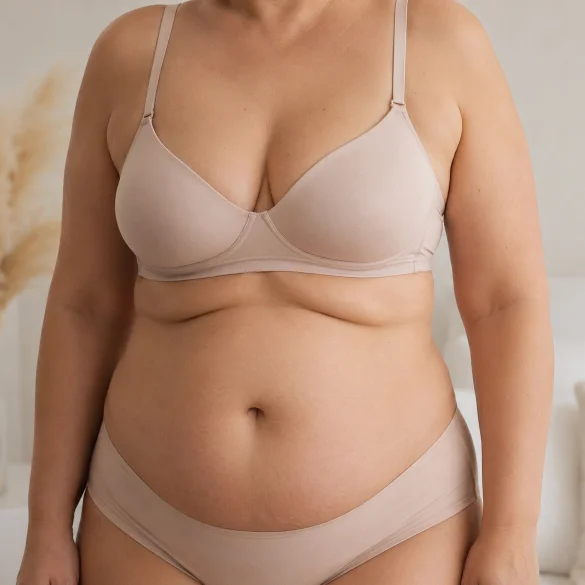
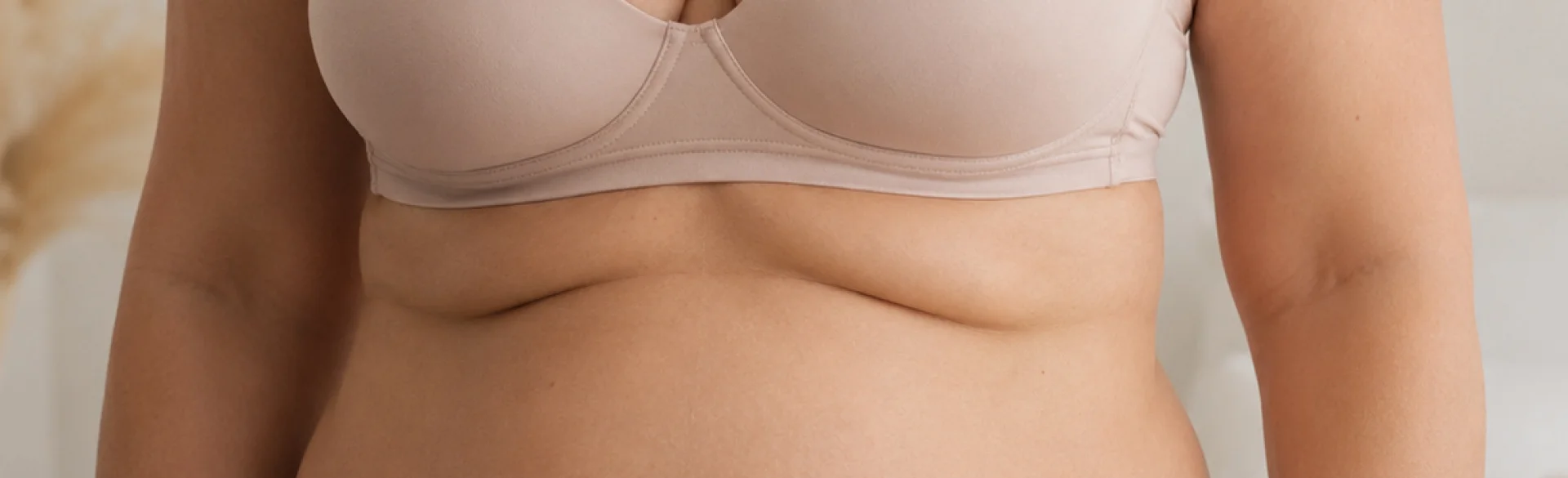
The under-breast fold is a depression formed at the junction between the lower pole of the breast and the anterior chest wall, anatomically referred to as the inframammary fold or submammary fold. Its presence is physiological; however, it can become more prominent as a result of breast sagging, accumulation of subcutaneous fat tissue, skin laxity, or a large volume of the mammary gland. A deep fold promotes sweat retention, increased temperature, and friction between adjacent skin surfaces. This can lead to chafing, intertrigo, and secondary yeast or bacterial infections. Management depends on the dominant cause: excess fat tissue, loss of skin firmness, breast sagging, or active inflammatory disease. Aesthetic procedures may only be performed after contraindications are ruled out and skin lesions are resolved.
Fold under the bust - why it forms
The anatomical inframammary fold is a normal structure that stabilizes the lower contour of the breast. Its position depends, among other things, on the chest structure, glandular volume, adipose tissue distribution, and the arrangement of fibrous connections between the skin and the pectoral fascia. The term "fold under the bust," on the other hand, is usually used when the indentation becomes deep and the breast or loose tissue partially covers the skin of the chest.
The most important mechanisms behind the formation of a distinct fold are:
- large breast volume, which increases the pressure of the lower pole on the chest;
- breast sagging, or ptosis, associated with skin stretching and the weakening of connective tissue support structures;
- excess fat tissue on the lower chest and upper abdomen;
- pregnancy and breastfeeding, during which significant changes in breast volume occur;
- large or repeated weight fluctuations, stretching the skin faster than it can remodel;
- genetic factors, influencing collagen quality, breast shape, and fat distribution;
- age and hormonal changes, especially a drop in estrogen levels during the perimenopausal period.
Body posture itself is not the primary cause of the fold, but increased thoracic kyphosis, forward shoulders, and a flexed position of the torso can enhance its visibility. Pectoral muscle exercises improve support and silhouette, but they do not eliminate localized excess skin nor do they significantly change the structure of the mammary gland.
Sudden enlargement of one breast, a palpable lump, skin or nipple retraction, nipple discharge, or persistent unilateral redness require medical evaluation. They should not be treated merely as an aesthetic issue.
The fold under the bust - why the skin in this area sags faster
Skin firmness depends primarily on the proper organization of collagen and elastin fibers, glycosaminoglycan content, extracellular matrix hydration, and fibroblast activity. With age, collagen synthesis decreases, its fragmentation increases, and elastin fibers lose their organized structure. The skin becomes thinner, less resilient, and less able to resist tensile forces.
The area under the bust is particularly stressed because it is simultaneously subject to:
- the weight of the breasts and chronic mechanical stress;
- bending and stretching of the skin during torso movements;
- friction between two adjacent surfaces;
- elevated humidity and temperature;
- limited air access;
- changes in breast and adipose tissue volume.
Prolonged stretching can lead to permanent reorganization of collagen and elastin. If body weight decreases rapidly, the volume of subcutaneous tissue diminishes sooner than the surface area of the stretched skin. This leaves loose tissue that settles into an additional fold. The risk is higher after significant weight loss, subsequent pregnancies, and in individuals with large breasts.
Skin condition is also affected by tobacco smoking, chronic exposure to ultraviolet radiation, nutritional deficiencies, long-term use of glucocorticosteroids, and certain connective tissue diseases. Topical skincare can improve stratum corneum hydration and epidermal barrier function, but a cosmetic product cannot remove advanced excess skin or lift a sagging breast. Such changes require an evaluation of the anatomy of the entire area, rather than merely the quality of its surface.
The fold under the breasts - why it is easy to get chafing and fungal infections
Intertrigo, also referred to as chafing, is an inflammatory condition that develops where two skin surfaces meet. Sweat cannot evaporate freely, causing the stratum corneum to become overhydrated and macerated. Simultaneous friction damages the epidermal barrier. This creates a warm and moist environment that promotes the multiplication of microorganisms.
Initially, erythema, burning, itching, and tenderness occur. In more advanced cases, erosions, fissures, oozing, an unpleasant odor, or pain appear. Intertrigo does not always indicate a fungal infection, but damaged skin can become secondarily infected by Candida yeasts, dermatophytes, or bacteria, including Corynebacterium minutissimum. Candidiasis is characteristically marked by intensely red, moist lesions with small satellite papules or pustules beyond the main focus. However, a similar presentation can be caused by inverse psoriasis, contact dermatitis, seborrheic dermatitis, and erythrasma.
The risk of recurrence is increased by:
- obesity and deep skin folds;
- large or sagging breasts;
- excessive sweating;
- diabetes, especially poorly controlled;
- tight, non-breathable underwear;
- immunosuppression and antibiotic therapy;
- a hot, humid climate.
Prevention includes thorough yet gentle drying of the skin fold, minimizing friction, wearing breathable and properly fitted underwear, and using moisture-wicking fabrics. Antifungal preparations should be used after a diagnosis is made or as directed by a physician. Recurrent, unilateral, painful, or non-healing lesions require dermatological evaluation, and sometimes mycological examination, bacterial culture, or assessment for carbohydrate metabolism disorders.
Fold under the bust - what treatments firm this area
The choice of therapy requires determining whether the appearance of the fold is primarily caused by skin laxity, localized adipose tissue, breast ptosis, or large breast volume. No firming procedure should be performed on skin with active intertrigo, fungal infection, erosions, or infection. Working in the immediate vicinity of the mammary gland requires special caution.
The Ambasada Urody offer includes the following methods that may be applied after individual qualification:
- 3D DeAge EX microneedle radiofrequency and Pixel RF microplasma – combine controlled micro-damage with heating of the dermis, initiating collagen remodeling. The offer specifically includes therapy for the bust as well as the bust with the cleavage.
- SonoQueen HIFU – focused ultrasound creates thermal coagulation points at a specified depth. The method can improve the tension of appropriately qualified skin, but the scope of action in the breast area must be determined by an experienced specialist.
- Non-invasive radiofrequency, including INDIBA, Alma Accent/Accent Prime, Reaction RF, Pellevé RF, and Body Mix RF – causes controlled tissue heating, which can lead to temporary contraction of collagen fibers and their subsequent remodeling.
- VelaShape, combining RF energy, infrared, negative pressure, and mechanical massage, can support firming and contouring of the area if the fold is accompanied by uneven subcutaneous tissue.
- Icoone and LPG endermologie – mechanically mobilize tissues and support microcirculation and drainage. They are complementary methods, and their ability to reduce actual excess skin is limited.
- Onda – microwave technology used primarily for contouring localized adipose tissue and improving skin tension.
- Zaffiro and fractional lasers – deliver a controlled thermal stimulus that stimulates skin remodeling; they require careful protection of the delicate inframammary area.
- Mesotherapy and tissue stimulators can support skin quality, but they do not lift the mammary gland and do not remove significant excess tissue.
- Body lifting threads are an invasive method intended for selected patients. Evidence regarding their use in this specific area is limited.
In the case of significant ptosis or macromastia, the most predictable anatomical correction is provided by surgical mastopexy or breast reduction. Localized excess fat may require liposuction, while a large skin apron – surgical excision. Non-invasive procedures usually produce mild to moderate improvement and are not an equivalent to surgery.

