Lipolysis
back to main page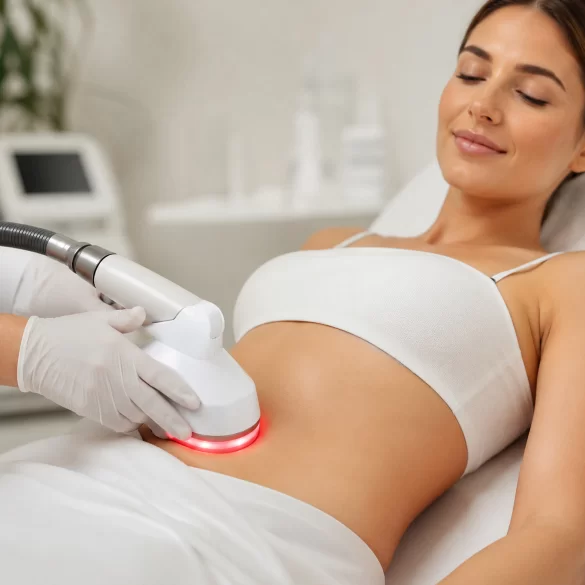
Lipolysis is a multi-stage metabolic process involving the breakdown of triglycerides stored in fat cells, i.e., adipocytes. As a result of this process, free fatty acids and glycerol are released, which can then be used by the body as a source of energy. Lipolysis is one of the fundamental mechanisms regulating human energy metabolism and plays an important role both in maintaining normal body weight and in the body's adaptation to physical exertion, starvation, or metabolic stress. In aesthetic medicine, this term also refers to therapeutic procedures leading to the reduction of locally accumulated adipose tissue, especially injection methods referred to as injection lipolysis.
Lipolysis - what it is and how it works
Physiological lipolysis occurs mainly in white adipose tissue and is controlled by the hormonal and enzymatic systems. The process begins with the activation of lipolytic enzymes, primarily hormone-sensitive lipase (HSL – hormone-sensitive lipase) and adipose triglyceride lipase (ATGL – adipose triglyceride lipase). These enzymes break down triglycerides into free fatty acids and glycerol.
The released fatty acids are transported to tissues requiring energy, such as skeletal muscles, cardiac muscle, or the liver. There, they undergo the process of beta-oxidation, i.e., a transformation leading to the production of ATP – the basic carrier of cellular energy.
Lipolysis proceeds in stages:
- Triglyceride hydrolysis – breakdown of fats stored in adipocytes.
- Release of fatty acids into the bloodstream.
- Transport involving albumin – plasma proteins that bind fatty acids.
- Energy utilization in cellular mitochondria.
This process remains closely linked to the body's energy balance. Under conditions of caloric surplus, lipogenesis processes, i.e., fat storage, dominate, whereas during a period of energy deficit, lipolysis is activated.
In aesthetic medicine, the concept of lipolysis also refers to treatments aimed at reducing localized fat deposits. Depending on the technology, it can be induced by:
- injections of lipolytic substances,
- the action of cold (cryolipolysis),
- ultrasound energy,
- radio waves,
- laser therapy,
- technologies utilizing a high-intensity electromagnetic field.
The goal of the treatments is not to treat obesity, but to contour the body and reduce stubborn fat tissue in specific anatomical areas, such as the chin, abdominal area, love handles, thighs, or arms.
Lipolysis - what triggers it
The activation of lipolysis depends on complex hormonal and metabolic mechanisms. The strongest stimulus triggering the process is an energy deficit, i.e., a situation in which the body consumes more energy than it receives from food.
The most important factors stimulating lipolysis include:
- catecholamines (adrenaline and noradrenaline),
- glucagon,
- growth hormone,
- cortisol,
- physical exertion,
- reduced insulin levels,
- fasting and calorie restriction.
The adrenergic system plays a key role. Adrenaline and noradrenaline bind to beta-adrenergic receptors present on the surface of adipocytes, activating a cascade of reactions leading to the breakdown of fat.
The process of lipolysis intensifies particularly during:
- aerobic activity,
- interval training,
- prolonged physical exertion,
- overnight fasting,
- reduction diets.
At the same time, there are factors that inhibit lipolysis. The most important of them is insulin, which promotes fat storage and limits the activity of lipolytic enzymes. For this reason, chronic hyperinsulinemia, often associated with a high-sugar diet and insulin resistance, promotes an increase in the amount of adipose tissue.
It is worth emphasizing that local reduction of adipose tissue solely through exercising a selected body part remains physiologically limited. The body mobilizes fat in a systemic way, depending on hormonal, genetic, and metabolic factors.
Physiological lipolysis vs injection lipolysis - the difference
Physiological lipolysis is a natural metabolic process that occurs constantly in the body. Its purpose remains the regulation of energy metabolism and providing energy during periods of increased demand. It does not lead to the direct destruction of fat cells, but to a reduction in their volume through the utilization of accumulated lipids.
Injection lipolysis, on the other hand, is an aesthetic medicine procedure involving the administration of substances that cause damage to adipocytes and the gradual reduction of local adipose tissue. The most commonly used preparations contain:
- sodium deoxycholate,
- phosphatidylcholine,
- lipolytic complexes supporting fat metabolism.
The mechanism of action of injection lipolysis is based on:
- destabilization of the adipocyte cell membrane,
- inducing controlled inflammation,
- breakdown of fat cells,
- removal of their contents by the lymphatic system and macrophages.
Unlike physiological metabolic lipolysis, the treatment acts locally and leads to the partial elimination of adipocytes in the selected area.
Injection lipolysis is primarily used in the reduction of:
- double chin,
- adipose tissue in the jawline area,
- love handles,
- back folds,
- small fat deposits on the abdomen,
- adipose tissue above the knees.
Temporary post-treatment symptoms may occur after the procedure:
- swelling,
- tenderness,
- redness,
- burning sensation,
- minor bruising.
The therapeutic effect develops gradually over several weeks, as the body needs time to remove the damaged fat cells.
In modern aesthetic medicine, injection lipolysis is often combined with other body contouring and skin quality improvement methods, such as:
- cryolipolysis,
- microneedle radiofrequency,
- endermologie,
- drainage and lymphatic treatments,
- tissue lifting technologies.
In clinical practice, appropriate patient qualification is of key importance. Injection lipolysis works best in individuals with normal or moderately elevated body weight who have localized, resistant fat deposits.
Treatments supporting body fat reduction
In body shaping therapies, various technologies are used to support fat reduction and improve body contours. The offer of Ambasada Urody Clinic & SPA includes, among others:
- injection lipolysis,
- cryolipolysis,
- endermologie and icoone,
- RF radio waves,
- draining and anti-cellulite treatments,
- technologies stimulating muscles and tissue metabolism.
The choice of procedure depends on:
- the amount of fat tissue,
- skin quality,
- the presence of laxity,
- the location of the problem,
- the patient's lifestyle and metabolic state.
The best results are achieved by combining treatment therapies with physical activity, a diet with a controlled energy supply, and the stabilization of the hormonal-metabolic balance.
