Rough elbows
back to main page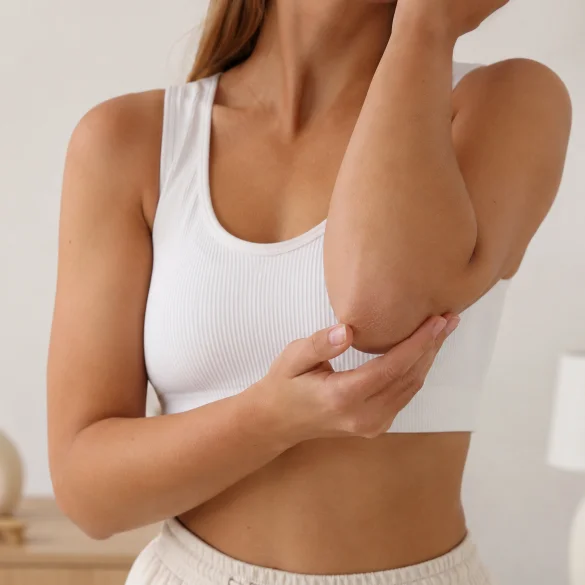
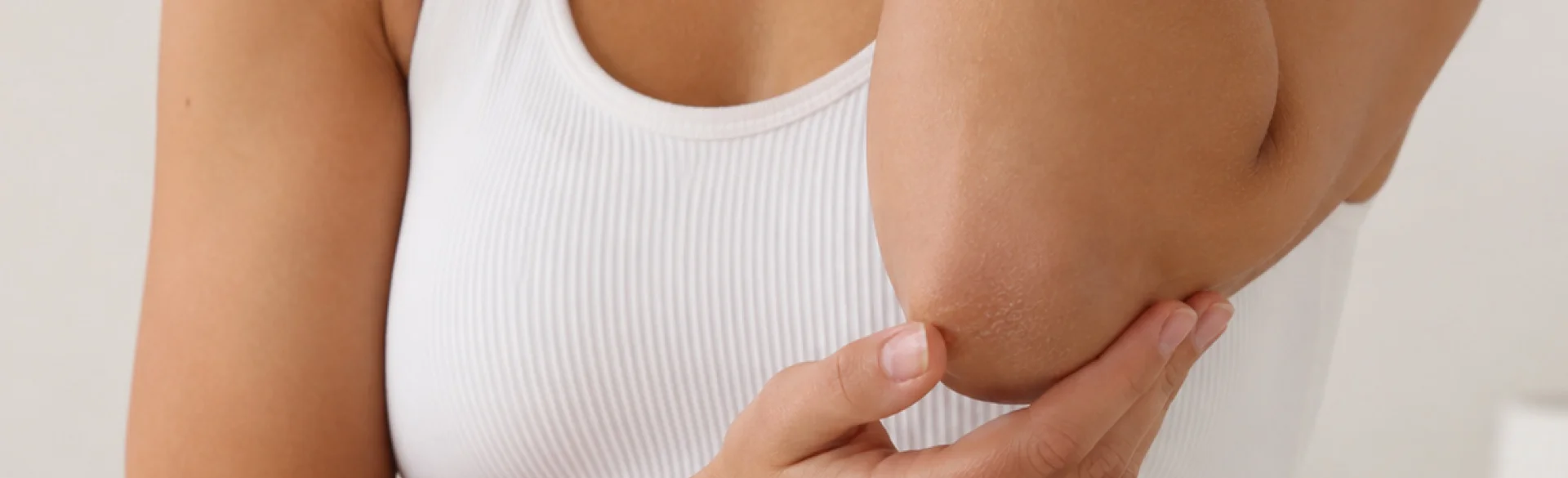
Rough elbows is a term describing uneven, thickened, or flaking skin covering the extensor surfaces of the elbow joints. Most often, the change results from a combination of epidermal dryness, chronic friction, and physiologically lower lubrication in this area. Repeated pressure stimulates keratinocytes to increase keratin production, leading to hyperkeratosis, which is excessive thickening of the stratum corneum. Elbows can become dull, rough, hard, scaly, and sometimes also darker. Usually, this is a skincare concern, but persistent roughness, itching, erythema, cracking, or lesions also occurring in other areas of the body may indicate a dermatological or systemic disease. Management therefore depends on the cause, not solely on the appearance of the skin.
Rough elbows - why the skin on the elbows is rough
The skin on the extensor surfaces of the elbows is subject to particular mechanical stress. Frequent resting of the elbows on a desk, the floor, or armrests causes friction, pressure, and minor damage to the epidermal barrier. In response, keratinocyte proliferation accelerates and keratin deposition increases. A protective thickening of the stratum corneum develops, referred to as mechanical hyperkeratosis.
Roughness is also contributed to by:
- epidermal lipid deficiency, including ceramides, cholesterol, and free fatty acids;
- increased transepidermal water loss, or TEWL;
- frequent, long baths in hot water;
- harsh detergents, alkaline soaps, and cosmetics containing irritating substances;
- dry, heated, or air-conditioned rooms;
- low humidity and cold;
- ultraviolet radiation;
- age, as aging reduces the amount of surface lipids and the ability of the stratum corneum to bind water;
- chronic rubbing of the skin with rough fabric;
- too frequent use of intensive scrubs.
The stratum corneum is not merely a collection of dead cells. It is composed of corneocytes surrounded by an ordered lipid matrix. This structure is compared to a wall in which the cells are "bricks" and the lipids are "mortar". Damage to the lipids increases water loss and weakens corneocyte cohesion. The skin becomes dry, less elastic, and distinctly rough.
Friction can additionally activate mechanotransduction pathways and local cytokine production. Therefore, chronic pressure not only thickens the epidermis, but can also exacerbate existing dermatoses, especially psoriasis and eczema. Roughness of the elbows, however, does not automatically indicate insufficient hydration of the entire body. Most often, it is a local disorder of keratinization and the epidermal barrier.
Rough elbows - how do they differ from dark elbows
Roughness primarily describes the texture of the skin's surface, whereas dark elbows refer to a change in its color. Both phenomena can occur together, but they are not synonymous.
Feature | Rough elbows | Dark elbows |
Dominant change | Roughness, scaling, thickening | Brown, grayish-brown, or darker discoloration |
Main mechanism | Dryness and hyperkeratosis | Hyperpigmentation, epidermal thickening, or both processes |
Typical factors | Friction, pressure, detergents, impaired barrier | Friction, inflammation, UV exposure, individual predisposition |
Additional symptoms | Tightness, itching, cracking | Most often no symptoms |
Basic management | Emollients and controlled keratolysis | Determining the cause and photoprotection; sometimes depigmentation treatment |
Chronic friction can simultaneously cause hyperkeratosis and stimulate melanogenesis. Among others, FADES (friction-associated darkening of extensor surfaces) has been described as an asymptomatic darkening of the extensor surfaces. Lesions are usually symmetrical, brownish, and only slightly scaly. Histologically, hyperkeratosis, acanthosis (thickening of the spinous layer of the epidermis), and papillomatosis are observed.
A darker color may also be the result of inflammation. Scratching, eczema, or psoriasis can leave post-inflammatory hyperpigmentation, which is particularly visible in darker skin phototypes. It should also be remembered that a thick layer of keratin alone can give the skin a darker, grayish appearance, even without a significant increase in melanin.
Dark elbows should not be vigorously scrubbed with a pumice stone or harsh scrubs. Microtrauma exacerbates inflammation, hyperkeratosis, and secondary pigmentation. The sudden appearance of extensive, velvety, dark lesions, especially on the back of the neck, in the armpits, or in the groins, requires a medical evaluation for acanthosis nigricans and metabolic disorders.
Rough elbows - what diseases can cause them
Isolated, symmetrical, and asymptomatic roughness is most often mechanical in nature. However, a lesion that is persistent, inflammatory, cracking, itchy, rapidly progressing, or resistant to proper skincare requires diagnostic evaluation.
Differential diagnosis includes:
- Plaque psoriasis. Elbows are one of its most typical locations. Well-demarcated, erythematous plaques covered with silvery-white scales occur. Lesions may also appear on the knees, scalp, and nails. Friction can trigger new lesions via the Koebner phenomenon.
- Atopic dermatitis and contact dermatitis. In addition to dryness, itching, erythema, scaling, excoriations, and sometimes vesicles or oozing occur. Chronic scratching leads to lichenification, which is the thickening of the skin and accentuation of its natural markings.
- Ichthyosis vulgaris or acquired ichthyosis. More extensive dryness and scaling of the limbs is characteristic. Acquired ichthyosis, especially when developing suddenly in an adult, may accompany systemic diseases or the use of certain medications.
- Keratosis pilaris. It causes numerous, small, rough papules associated with the plugging of hair follicle orifices. It more commonly affects the arms and thighs than the elbow tip itself.
- Frictional lichenoid dermatitis. It causes clusters of small, flattened papules on extensor surfaces, particularly in children. It may worsen after contact with sand, rough clothing, or hard surfaces.
- Hypothyroidism. It can cause generalized dryness, roughness, and hyperkeratosis. Suspicion is increased by, among others, cold intolerance, fatigue, constipation, weight gain, edema, and deterioration of hair condition.
- Diabetes and insulin resistance. They can promote dry skin. Velvety, brownish thickening in body folds suggests acanthosis nigricans, which is more commonly associated with hyperinsulinemia than isolated elbow roughness.
- Nutritional deficiencies. Severe deficiencies of zinc, vitamin A, essential fatty acids, or niacin can alter keratinization, but rarely manifest exclusively on the elbows. They should not be diagnosed solely based on the appearance of the skin, nor should supplements be taken without indication.
A dermatological consultation is indicated when lesions are painful, bleed, are unilateral, have an indurated border, form an ulceration, enlarge rapidly, or do not resolve despite several weeks of proper care. Depending on the clinical presentation, the doctor may perform dermatoscopy, a mycological examination, patch tests, a biopsy, or order laboratory tests, such as TSH, blood glucose, or glycated hemoglobin. The scope of testing should result from the medical history and clinical examination, and not from the presence of rough elbows alone.
Rough elbows - how to smooth them
The basis of therapy is reducing friction, while simultaneously rebuilding the epidermal barrier and gradually reducing hyperkeratosis. The result requires regularity, as continuing to lean elbows on hard surfaces sustains the stimulus leading to skin thickening.
Home care should include:
- Gentle cleansing. Choose mild syndets with a physiological pH and avoid hot water, rough washcloths, and vigorous towel drying.
- Daily use of an emollient. Preparations containing ceramides, cholesterol, glycerin, petrolatum, or oils reduce water loss and improve barrier cohesion.
- Controlled keratolysis. Urea at a concentration of approximately 10% acts primarily as a moisturizer, whereas concentrations of 15-30% exhibit stronger softening and keratolytic effects. Lactic acid, salicylic acid, or alpha hydroxy acids can also be helpful. Do not combine several potent preparations simultaneously or apply them to cracked or inflamed skin.
- Occlusion. Applying an occlusive product, such as petrolatum, in the evening reduces TEWL and can help soften hyperkeratosis.
- Sun protection. When elbows are exposed, photoprotection limits the persistence of hyperpigmentation.
- Pressure reduction. Adjusting sitting posture and using a soft forearm pad can be just as important as cosmetic products.
In cases of active psoriasis, eczema, or infection, the underlying condition is treated first. Intensive exfoliation may worsen the skin condition in such instances. Glucocorticosteroids, vitamin D analogues, calcineurin inhibitors, or other medications should only be used according to a medical diagnosis and doctor's recommendations.
Ambasada Urody’s offer includes procedures that, once inflammatory conditions are ruled out, can support the care of dry, rough, or excessively thickened skin:
- BioRePeelCl3® BODY is a chemical peel designed for areas including the elbows. It contains TCA and organic acids, among other ingredients, allowing it to provide controlled exfoliation of the thickened stratum corneum, smooth texture, and support epidermal renewal. The procedure requires qualification, especially in the case of sensitive skin, hyperpigmentation, and higher phototypes.
- Body peels using mechanical or enzymatic preparations remove superficial corneocytes and prepare the skin for further moisturization. The type of peel should match the thickness of the stratum corneum and barrier integrity.
- DermaClear Body combines hydrodermabrasion, controlled exfoliation, vacuum cleansing, and the application of moisturizing ingredients. It can help improve the texture of rough body skin if the treatment area and the condition of the elbows are approved during qualification.
- Healing Earth organic treatments, including the African Potato, Kalahari Melon, Mongongo Nut, and Pinotage rituals, combine peels, masks, oils, and plant butters. Their main role is replenishing lipids, reducing water loss, and improving skin softness.
- Nourishing body wraps provide emollient and occlusive support for dry epidermis, enhancing its elasticity and reducing the feeling of roughness.
- Shea Butter massage acts primarily as a lipid-replenishing and occlusive treatment. It does not eliminate the root cause of hyperkeratosis, but it can complement the care of dry skin that is free of active inflammation.
- iPixel laser peel is a procedure that remodels uneven skin texture. It is not the first-line treatment for ordinary elbow roughness and may only be considered after individual qualification when additional indications exist, such as persistent surface irregularities or discoloration.
Cosmetology treatments do not replace medical diagnostics of skin lesions. They should not be performed on skin with active inflammation, weeping, infection, fresh cracks, or undiagnosed pigmented lesions. The most lasting result is achieved by combining a properly selected procedure with systematic barrier care and the reduction of mechanical irritation.

