Stretch marks on buttocks
back to main page
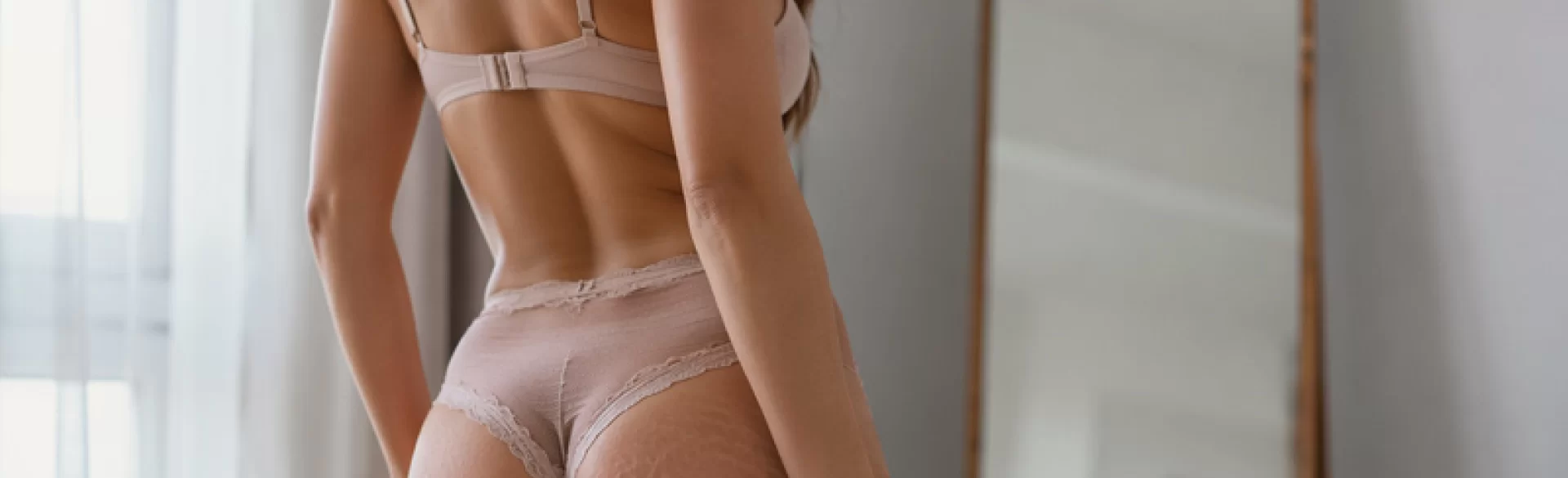
Stretch marks on the buttocks (striae distensae) are a form of atrophic scars resulting from damage to collagen and elastin fibers in the dermis. They most commonly appear as linear, initially red-purple lesions (striae rubrae), which over time become discolored and take the form of light, pearly streaks (striae albae). The location within the buttocks results from the high susceptibility of this area to fluctuations in adipose tissue volume and skin tension. This problem affects both women and men, especially during periods of intense hormonal changes or body mass.
Stretch marks on the buttocks - causes
The etiopathogenesis of stretch marks is multifactorial and includes mechanical as well as hormonal and genetic factors. A key role is played by excessive skin stretching, which leads to micro-injuries within the extracellular matrix.
The most important causes include:
- rapid weight gain – especially in a short period of time, when the skin cannot keep up with adaptation,
- puberty – intensive growth and changes in body proportions,
- pregnancy – the action of hormones (mainly cortisol and estrogens) and skin stretching,
- hormonal disorders – e.g., Cushing's syndrome or long-term glucocorticosteroid therapy,
- genetic predisposition – affecting the quality and strength of collagen fibers,
- intensive strength training – rapid muscle mass gain.
At the histological level, a decrease in the number of fibroblasts (collagen-producing cells), degradation of type I and III collagen fibers, and disturbances in the elastin structure are observed. As a result, the skin loses its ability to regenerate and stretch elastically.
Stretch marks on the buttocks - what helps
Management of stretch marks should be tailored to their stage of development. In the early stage (striae rubrae), there is greater therapeutic potential, whereas established changes require more advanced methods.
Supporting actions include:
- topical preparations:
- retinoids (e.g., tretinoin) – stimulate collagen synthesis,
- hyaluronic acid – improves skin hydration and elasticity,
- vitamin C – supports regenerative processes,
- proper skin care:
- regular moisturizing,
- massage improving microcirculation,
- metabolic prophylaxis:
- weight stabilization,
- diet rich in amino acids, zinc, and vitamins (A, C, E),
- physical activity:
- improving blood supply and tissue metabolism.
It is worth emphasizing that home methods show limited effectiveness in the case of advanced stretch marks, and their role is mainly supportive and preventive.
Stretch marks on buttocks - how to get rid of them
Reduction of stretch marks requires the use of aesthetic medicine procedures with documented effects on dermis remodeling. The aim of the therapy is to stimulate fibroblasts, induce neocollagenesis, and improve skin structure.
The most commonly used methods include:
- fractional laser therapy (ablative and non-ablative)
It causes controlled micro-damage to the skin, which initiates regenerative processes and collagen remodeling.
- microneedle radiofrequency
It combines microneedling with radio frequency wave energy, leading to intensive stimulation of the dermis and improvement of its density.
- microneedle and needle mesotherapy
It delivers active substances (e.g., peptides, amino acids) and stimulates repair processes through micro-injuries.
- platelet-rich plasma (PRP)
It uses growth factors for tissue regeneration and improvement of skin structure.
- chemical peels (e.g., TCA acid)
They stimulate cellular renewal and improve skin texture.
Comparison of selected methods
| Method | Mechanism of action | Effects | Number of treatments |
|---|---|---|---|
| Micro-damage, neocollagenesis | Shallowing of stretch marks, improvement of skin tone | 3–6 | |
| Microneedle RF | Skin heating + microneedling | Skin densification | 3–5 |
| Mesotherapy | Skin stimulation and nourishment | Improvement of skin quality | 4–8 |
| PRP | Growth factors | Regeneration and revitalization | 3–5 |
Therapy effects are gradual and depend on the depth and age of the stretch marks. Complete removal of the lesions remains biologically limited; however, it is possible to significantly reduce their depth, even out the skin tone, and improve skin structure.

