Spots in intimate areas
back to main page
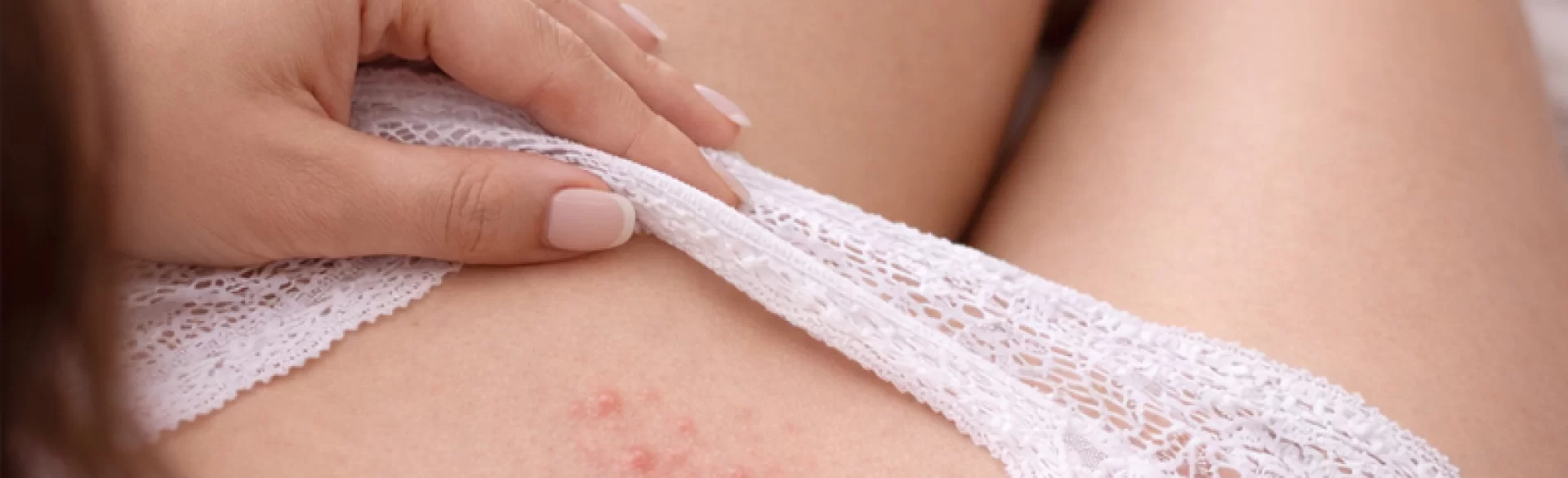
Bumps in intimate areas are skin changes located on the vulva, labia, clitoris, pubic mound, penis, scrotum, groin, and perianal area. They can be inflammatory, infectious, allergic, or hormonal in nature. In clinical practice, they most commonly correspond to folliculitis, acne, epidermal cysts, viral changes (e.g., HPV), or herpes. Due to the specific characteristics of this area – high humidity, friction, presence of microbiota, and frequent microtraumas following depilation – even a slight disruption of the epidermal barrier can lead to the formation of painful, red bumps or pustules. Proper differential diagnosis is crucial, as some changes may mimic sexually transmitted diseases.
Acne in intimate areas – causes
The etiology of papulopustular changes in the intimate area is varied and includes local, systemic, and infectious factors.
The most common dermatological causes:
- Folliculitis – usually bacterial (most commonly Staphylococcus aureus), often after shaving or depilation.
- Ingrown hairs (pseudofolliculitis) – result of microtraumas and improper depilation technique.
- Hidradenitis suppurativa – chronic inflammation of apocrine sweat glands, particularly in the groin area.
- Epidermoid and sebaceous cysts – painless nodules that may become secondarily infected.
- Contact dermatitis – reaction to hygiene products, lubricants, condoms (latex), pads.
Infectious causes:
- Viral infections – genital herpes (HSV-1, HSV-2), genital warts (HPV).
- Bacterial infections – boils, abscesses.
- Fungal infections (Candida spp.) – usually accompanied by itching and erythema.
Systemic and hormonal factors:
- hyperandrogenism,
- insulin resistance,
- obesity,
- chronic stress and immunosuppression.
It is important to emphasize that not every change in this area is a sexually transmitted disease. However, any recurring, painful, rapidly growing, or ulcerated lesions require medical consultation.
Acne in Intimate Areas – What Do They Look Like
The clinical picture depends on the etiology. Important factors in diagnosis include: color, pain, presence of purulent content, ulcers, and the dynamics of changes.
The most common morphological forms:
- Papules (papulae) – elevated, hard lesions without purulent content.
- Pustules (pustulae) – filled with purulent content, often with erythema around them.
- Vesicles (vesiculae) – typical for herpes; they burst, forming erosions.
- Inflammatory nodules – painful, deep, in inverse acne.
- Cauliflower-like growths – characteristic of HPV infection.
Alarm features requiring urgent diagnosis:
- ulceration,
- severe pain and swelling,
- enlargement of inguinal lymph nodes,
- fever,
- multiple lesions with rapid progression.
Differential diagnosis includes, among others, primary syphilis (hard, painless ulcer), molluscum contagiosum, lichen sclerosus, and vulvar or penile skin cancers.
Acne in intimate areas – how to treat
Therapeutic management depends on the diagnosis. Symptomatic treatment without determining the cause can be ineffective and may mask the clinical picture.
1. Folliculitis:
- topical antiseptics (octenidine, chlorhexidine),
- topical antibiotics (e.g., mupirocin),
- for extensive lesions – systemic antibiotic therapy.
2. Genital herpes:
- antiviral treatment (acyclovir, valacyclovir),
- avoid sexual contact during the active phase.
3. Fungal infections:
- topical antifungal medications (azole-based),
- in recurrences – systemic treatment.
4. Hidradenitis suppurativa:
- antibiotics,
- biological treatment in severe forms,
- surgical procedures for fistulas and abscesses.
Supporting measures:
- avoid shaving during the inflammatory phase,
- wear breathable, cotton underwear,
- limit irritating cosmetics,
- maintain a healthy body weight,
- control blood glucose in insulin resistance.
Self-extraction of lesions should be strictly avoided – it increases the risk of abscesses, scarring, and spreading the infection.
In cases of recurrent lesions, painful nodules, or suspected sexually transmitted diseases, consultation with a dermatologist, gynecologist, or urologist is recommended. Diagnostics may include microbiological tests, PCR tests for HSV/HPV, and serological tests.

