Fibroblasts
back to main page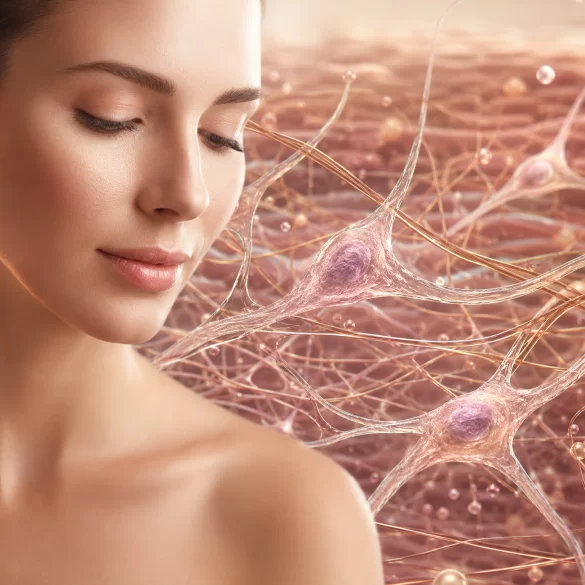
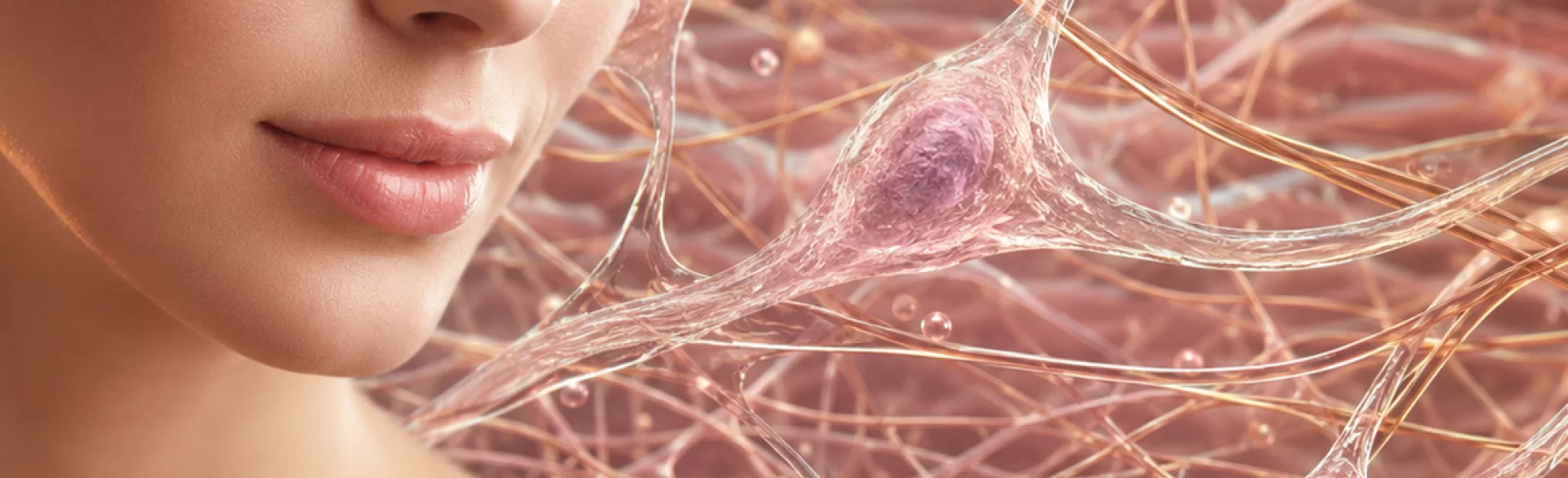
Fibroblasts are the basic cells of connective tissue responsible for the production and maintenance of the skin's extracellular matrix. They primarily produce collagen, elastin, and hyaluronic acid - structures responsible for the firmness, elasticity, and proper hydration of the skin. These cells play a key role in the processes of regeneration, wound healing, and tissue remodeling. The activity of fibroblasts directly affects the condition of the skin of the face and body, and their gradual weakening with age is one of the main mechanisms of aging. Modern dermatology and aesthetic medicine focus largely on the stimulation of fibroblasts to stimulate natural skin rebuilding processes and improve its structure without the effect of artificial tightness.
Fibroblasts - what they are and where they are located
Fibroblasts are specialized connective tissue cells of mesenchymal origin. They occur primarily in the dermis, but also in tendons, ligaments, joint capsules, internal organs, and blood vessel walls. Their main task remains the synthesis of extracellular matrix components, i.e., the structure that constitutes a biological “scaffolding” for tissues.
In the skin, fibroblasts are located mainly in the reticular layer of the dermis. There, they remain in continuous interaction with:
- collagen fibers,
- elastin fibers,
- blood vessels,
- immune system cells,
- epidermal keratinocytes.
Fibroblasts have the ability to respond to mechanical, chemical, and hormonal stimuli. This means that their activity can increase under the influence of skin micro-injuries, growth factors, or appropriately selected aesthetic procedures.
Under physiological conditions, fibroblasts remain in a state of relative metabolic balance. However, upon skin injury, they undergo intensive activation and initiate the process of tissue regeneration. This increases the production of collagen and other supporting proteins, enabling the reconstruction of damaged structures.
In dermatology, aging fibroblasts (senescent fibroblasts) are also distinguished, which lose the ability to properly synthesize collagen and begin to secrete pro-inflammatory mediators that intensify skin degradation. This mechanism plays an important role in the process of chronological aging and photoaging.
Fibroblasts - role in the production of collagen and elastin
The most important function of fibroblasts remains the synthesis of skin support proteins, primarily collagen and elastin. It is these fibers that are responsible for the tension, mechanical resistance, and elasticity of tissues.
Collagen
Fibroblasts mainly produce:
- type I collagen,
- type III collagen,
- type V collagen.
Type I collagen is responsible for skin strength, while type III collagen is primarily involved in regenerative processes and healing. Collagen synthesis is a multi-step process requiring the presence of:
- vitamin C,
- amino acids,
- oxygen,
- proper microcirculation.
With age, fibroblast activity decreases, and collagen fibers undergo fragmentation. The skin becomes thinner, less firm, and more prone to the formation of wrinkles and sagging.
Elastin
Elastin is responsible for the skin's ability to return to its original shape after stretching. Elastin fibers form a complex network that ensures tissue elasticity. Unlike collagen, elastin regenerates much slower, which is why its degradation is particularly significant in the aging of body skin.
Damage to elastin fibers is observed primarily under the influence of:
- UV radiation,
- tobacco smoking,
- chronic oxidative stress,
- inflammation,
- hormonal disorders.
Fibroblasts also participate in the production of hyaluronic acid, proteoglycans, and glycosaminoglycans responsible for maintaining proper skin hydration. As a result, these cells simultaneously affect:
- firmness,
- smoothness,
- tension,
- density,
- skin hydration level.
Modern anti-aging therapies focus on the biostimulation of fibroblasts through controlled micro-injuries or the delivery of growth factors that activate natural regenerative processes.
Fibroblasts and body skin aging
The skin aging process is directly linked to a decrease in the number and activity of fibroblasts. Already after the age of 25, collagen synthesis begins to gradually decrease, and after menopause, this process significantly accelerates. The result is structural changes affecting both the face and the skin of the entire body.
The most important symptoms of weakened fibroblast function include:
- loss of skin firmness,
- tissue laxity,
- skin thinning,
- deterioration of skin tension,
- dryness,
- greater susceptibility to damage,
- slower wound healing,
- appearance of wrinkles and furrows.
An important role is also played by photoaging caused by UV radiation. Ultraviolet rays activate matrix metalloproteinases (MMPs), which are enzymes that break down collagen and elastin. At the same time, damage to the fibroblasts themselves and chronic oxidative stress occur.
Within the body's skin, the aging process is particularly visible in the following areas:
- arms,
- abdomen,
- thighs,
- knees,
- décolletage,
- neck.
Modern aesthetic medicine uses numerous methods stimulating fibroblasts to rebuild the skin and improve its quality. The most commonly used procedures include:
- tissue biostimulators,
- needle mesotherapy,
- microneedle radiofrequency,
- fractional laser therapy,
- platelet-rich plasma,
- treatments using polynucleotides,
- collagen stimulators,
- HIFU,
- carboxytherapy.
At Ambasada Urody, procedures aimed at intensive skin remodeling and fibroblast activation are used, including microneedle radiofrequency, fractional laser, mesotherapy, and tissue biostimulators supporting the natural regeneration of collagen and elastin.
The greatest therapeutic efficacy is achieved through regular skin stimulation and the simultaneous limitation of factors accelerating fibroblast degradation, such as excessive exposure to UV radiation, tobacco smoking, chronic inflammation, and oxidative stress.

