Intestinal hernia
back to main page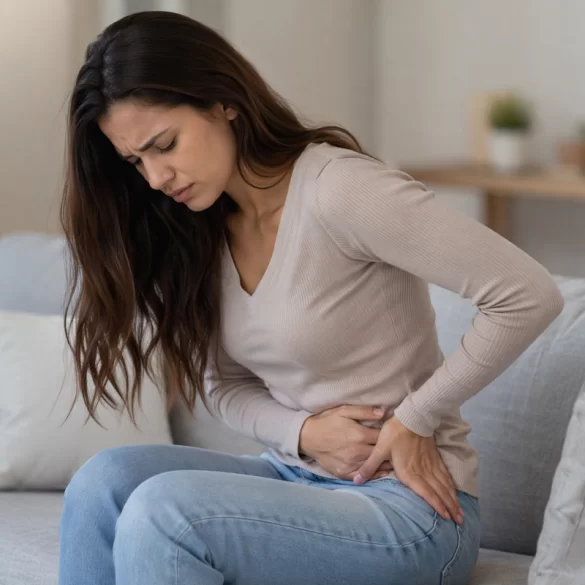

An intestinal hernia is the pathological displacement of a portion of the intestine beyond its normal anatomical position through weakened or damaged abdominal walls. It occurs as a result of a disruption in the continuity of musculo-fascial structures, which allows the protrusion of abdominal organs into a hernial sac. This condition is among the most common surgical problems, and its clinical significance arises from the risk of complications, such as incarceration or intestinal ischemia. Intestinal hernias can occur in various locations, including inguinal, umbilical, or incisional.
Intestinal hernia – what it looks like
The clinical presentation of an intestinal hernia is relatively characteristic, although it depends on its location and stage of advancement. Most often, a soft, elastic bulge under the skin is observed, which increases in volume during an increase in intra-abdominal pressure (e.g., coughing, straining, physical exertion).
Morphological features of an intestinal hernia include:
- visible or palpable bulge within the abdominal wall,
- variable size of the lesion – it often decreases in the lying position,
- reducibility (in the initial stages),
- in more advanced cases – a fixed, hard thickening.
Most common locations:
- inguinal region (inguinal hernia),
- umbilical region (umbilical hernia),
- postoperative scars (incisional hernia),
- abdominal linea alba.
In the case of complications, the appearance of the lesion changes – skin redness, swelling, and tenderness to palpation may occur, which indicates inflammation or bowel incarceration.
Intestinal hernia – symptoms
Symptoms of an intestinal hernia are both local and systemic in nature. In the initial phase of the disease, they may be subtle; however, as the pathology progresses, they become increasingly severe.
The most common symptoms include:
- a feeling of discomfort or heaviness in the area of the hernia, worsening during exertion,
- pain of varying intensity – from dull to acute,
- an enlarging bulge, especially when coughing or straining,
- a „pulling” sensation within the abdomen.
In the case of intestinal involvement, gastrointestinal symptoms may occur:
- nausea and vomiting,
- peristalsis disorders (constipation or obstruction),
- bloating,
- retention of gas and stool.
An emergency condition is hernia incarceration, which leads to intestinal ischemia. It manifests as:
- severe, sudden pain,
- hardness and irreducibility of the hernia,
- symptoms of intestinal obstruction,
- worsening of the general condition.
Such a clinical presentation requires urgent surgical intervention.
Intestinal hernia – diet
Diet plays an important role in the prevention of hernia progression and in reducing symptoms, especially those related to the gastrointestinal tract. Its main goal is reduction of intra-abdominal pressure and improvement of intestinal peristalsis.
Basic principles of nutrition:
- high-fiber diet – vegetables, fruits, whole grain cereal products,
- adequate fluid intake (min. 1.5–2 l daily),
- avoiding gas-producing products (e.g. legumes, carbonated beverages),
- regular consumption of meals in small portions.
Recommended products:
- cooked vegetables (e.g. carrots, zucchini),
- groats, rice, whole grain bread,
- fermented dairy products,
- lean protein (poultry, fish).
Limited products:
- hard-to-digest fried dishes,
- fatty meats,
- excess simple sugars,
- alcohol.
In clinical practice, preventing constipation is of particular importance, as it increases the risk of hernia enlargement and its complications. However, diet is a supporting element – it does not eliminate the cause of the disease.
Intestinal hernia – treatment
The treatment of intestinal hernia is primarily surgical, because this condition does not resolve spontaneously. The choice of method depends on the size of the hernia, its location, and the patient's general condition.
Surgical treatment
The standard of care is a surgical procedure consisting of:
- reduction of the hernia sac contents,
- closing the hernia orifice,
- reinforcing the abdominal wall (often using a synthetic mesh).
Surgical techniques:
- classic (open) methods,
- laparoscopic techniques – less invasive, shorter recovery time.
Conservative treatment
It has limited application and includes:
- use of hernia belts (only temporarily),
- lifestyle modification (weight reduction, avoiding heavy lifting),
- treatment of constipation.
It does not constitute a causative solution and is used mainly in patients who do not qualify for surgery.
Management of complications
Hernia incarceration is an indication for urgent surgery. Lack of intervention may lead to:
- bowel necrosis,
- perforation,
- peritonitis.
Support for tissue regeneration and wall aesthetics
After surgical treatment or in the case of abdominal wall weakness, supporting procedures are used:
- radiofrequency (RF) – collagen stimulation and improvement of tissue tension,
- HIFU – non-invasive strengthening of deep structures,
- endermologie and vacuum massages – improvement of microcirculation and tissue trophics.
In clinical practice, these procedures serve a complementary and supportive function, especially in the context of tissue quality and recurrence prevention.

