Pimples on temples
back to main page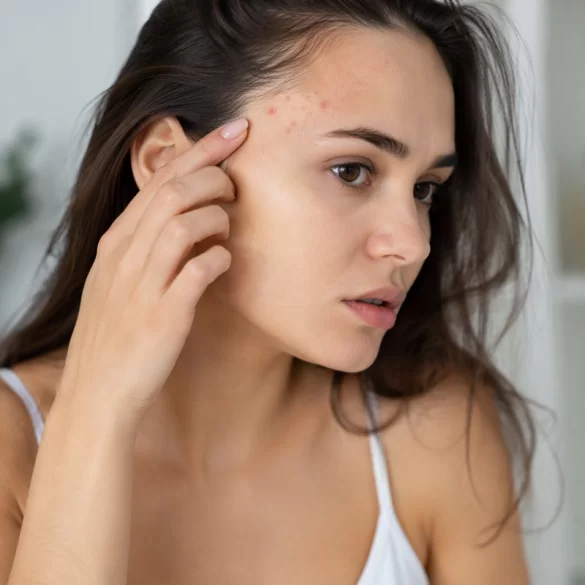
Pimples on the temples are one of the locations of acne lesions within the face, which can be both mild (comedones, papules) and inflammatory (pustules, nodules) in nature. The temple area belongs to the so-called lateral zone of the face, where the skin exhibits different sebaceous gland activity than the T-zone, while also being particularly exposed to external factors, such as hair cosmetics or contact with pollutants. In clinical terms, lesions in this area often have a multifactorial etiology and can reflect both dermatological and systemic disorders.
Pimples on the temples – what causes them
Pimples on the temples are one of the locations of acne lesions on the face, which can be either mild (comedones, papules) or inflammatory (pustules, nodules) in nature. The temple area belongs to the so-called lateral zone of the face, where the skin exhibits different sebaceous gland activity than the T-zone, while being particularly exposed to external factors such as hair cosmetics or contact with pollutants. In clinical terms, lesions in this area often have a multifactorial etiology and can reflect both dermatological and systemic disorders.
Pimples on the temples – what causes them
The etiopathogenesis of acne lesions within the temples is complex and involves the interaction of endogenous and exogenous factors. In this location, the following are of particular importance:
1. Excessive sebum production (seborrhea)
Sebaceous glands react to androgens (sex hormones), leading to increased sebum production. Combined with impaired keratinization of the hair follicle openings, this promotes the formation of comedones.
2. Hormonal disorders
Hormonal fluctuations, especially:
- hyperandrogenism,
- menstrual cycles,
- stress (cortisol),
can intensify lesions in the lateral parts of the face.
3. External factors (acne cosmetica)
The temples are particularly susceptible to contact with comedogenic substances:
- hair styling products (sprays, oils, silicones),
- heavy creams and sunscreens,
- cosmetics remaining on the hairline.
4. Skin microbiota
The development of Cutibacterium acnes bacteria under conditions of excess sebum leads to an inflammatory reaction.
5. Mechanical factors
Friction and pressure (e.g., from glasses, headbands, helmets) can induce so-called acne mechanica.
6. Diet and lifestyle
A diet with a high glycemic index and the consumption of dairy products can affect sebaceous gland activity through insulin-IGF-1 pathways.
Pimples on the temples – what it means
The location of acne lesions can have diagnostic significance, although modern medicine approaches so-called „face mapping” with great caution. Nonetheless, certain clinical correlations are observed:
1. Hormonal disorders and stress
Lesions in the temple area often co-occur with chronic stress, which, through the hypothalamus–pituitary–adrenal axis, increases sebum production and inflammation.
2. Dermatological problems related to hair and scalp
- seborrheic dermatitis,
- excessively oily scalp,
- use of inappropriate hair cosmetics.
3. Impaired skin barrier function
A damaged hydrolipid barrier promotes the penetration of irritants and the development of inflammation.
4. Possible systemic links (indirect)
Although there is no clear evidence, a link is observed between intensified acne and:
- insulin resistance,
- polycystic ovary syndrome (PCOS),
- chronic oxidative stress.
In clinical practice, the overall assessment of the patient is crucial – a single location of lesions rarely constitutes an independent diagnostic basis.
Pimples on the temples – how to treat them
Therapeutic management should be individually selected and take into account both the cause of the lesions and their severity.
1. Topical treatment
The basis of therapy consists of dermatological preparations:
- retinoids (e.g., adapalene, tretinoin) – normalize keratinization and prevent the formation of comedones,
- benzoyl peroxide – has antibacterial and anti-inflammatory effects,
- azelaic acid – reduces inflammation and post-inflammatory hyperpigmentation,
- AHA/BHA acids (e.g., salicylic acid) – support exfoliation and cleansing of the hair follicle openings.
2. Systemic treatment
In moderate and severe cases, the following are used:
- oral antibiotics (short-term),
- hormonal therapy (e.g., hormonal contraception in women),
- isotretinoin – in severe, resistant forms of acne.
3. Modification of skincare and lifestyle
Eliminating aggravating factors is of key importance:
- using non-comedogenic cosmetics,
- thorough skin cleansing, especially at the hairline,
- limiting heavy hair styling products,
- stress reduction and sleep optimization,
- a low glycemic index diet.
4. Dermatological and cosmetological procedures
Modern aesthetic medicine offers effective methods to support treatment:
- chemical peels (salicylic, mandelic, pyruvic acid) – regulation of cornification and sebum,
- hydrogen purification and Hydrafacial – deep cleansing and reduction of oxidative stress,
- oxygen infusion – improvement of skin oxygenation and regeneration,
- LED light therapy – antibacterial and anti-inflammatory action,
- non-ablative laser therapy – reduction of sebaceous gland activity and inflammation,
- microneedling radiofrequency – improvement of skin structure and reduction of post-acne lesions.
5. Interdisciplinary approach
In recurrent or resistant cases, consultation is recommended with:
- a dermatologist,
- an endocrinologist,
- a gynecologist (in women with suspected PCOS).
Pimples on temples – what it means
The location of acne lesions can have diagnostic significance, although modern medicine approaches so-called “face mapping” with great caution. Nevertheless, certain clinical correlations are observed:
1. Hormonal disorders and stress
Lesions in the temple area often co-occur with chronic stress, which, through the hypothalamus–pituitary–adrenal axis, increases sebum production and inflammation.
2. Dermatological problems related to hair and scalp
- seborrheic dermatitis,
- excessive scalp oiliness,
- the use of inappropriate hair cosmetics.
3. Impaired skin barrier function
A damaged hydrolipid barrier facilitates the penetration of irritants and the development of inflammation.
4. Possible systemic links (indirect)
Although there is a lack of conclusive evidence, a link is observed between severe acne and:
- insulin resistance,
- polycystic ovary syndrome (PCOS),
- chronic oxidative stress.
In clinical practice, a comprehensive assessment of the patient is key – a single location of lesions rarely constitutes an independent diagnostic basis.
Pimples on temples – how to treat
Therapeutic management should be individually selected and take into account both the cause of the lesions and their severity.
1. Topical treatment
Dermatological preparations form the basis of the therapy:
- retinoids (e.g., adapalene, tretinoin) – normalize keratinization and prevent the formation of comedones,
- benzoyl peroxide – has antibacterial and anti-inflammatory effects,
- azelaic acid – reduces inflammation and post-inflammatory hyperpigmentation,
- AHA/BHA acids (e.g., salicylic acid) – support exfoliation and cleansing of the hair follicle openings.
2. Systemic treatment
In moderate and severe cases, the following are used:
- oral antibiotics (short-term),
- hormone therapy (e.g., hormonal contraception in women),
- isotretinoin – in severe, resistant forms of acne.
3. Modification of skincare and lifestyle
Eliminating aggravating factors is of key importance:
- use of non-comedogenic cosmetics,
- thorough cleansing of the skin, especially at the hairline,
- limiting heavy hair styling products,
- stress reduction and optimization of sleep,
- low glycemic index diet.
4. Dermatological and cosmetological treatments
Modern aesthetic medicine offers effective methods supporting treatment:
- chemical peels (salicylic, mandelic, pyruvic acid) – regulation of keratinization and sebum,
- hydrogen purification and Hydrafacial – deep cleansing and reduction of oxidative stress,
- oxygen infusion – improvement of skin oxygenation and regeneration,
- LED light therapy – antibacterial and anti-inflammatory action,
- non-ablative laser therapy – reduction of sebaceous gland activity and inflammation,
- microneedle radiofrequency – improvement of skin structure and reduction of post-acne lesions.
5. Interdisciplinary management
In recurrent or resistant cases, consultation is recommended:
- dermatological,
- endocrinological,
- gynecological (in women with suspected PCOS).

