Herpes scars
back to main page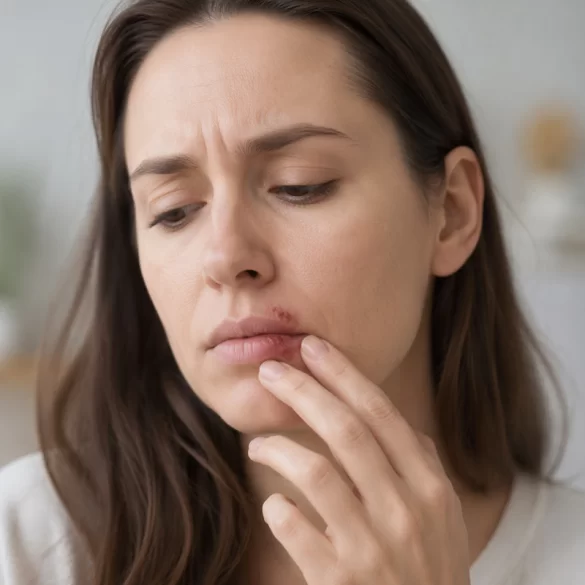
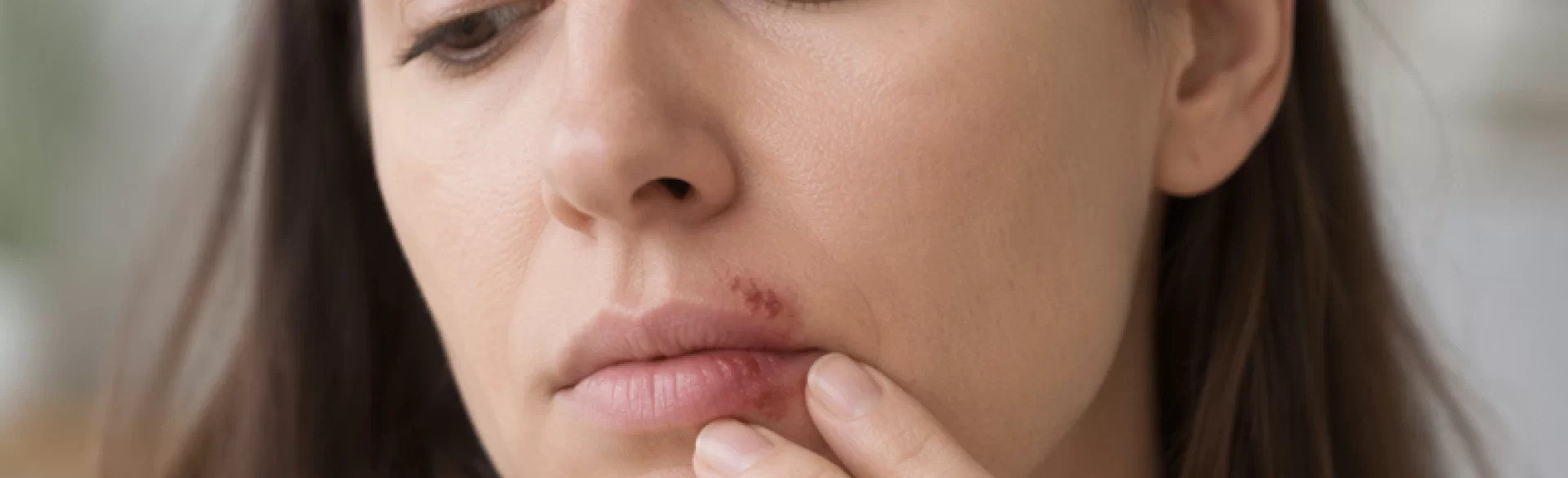
Herpes scars are a consequence of skin damage caused by the herpes simplex virus (HSV – Herpes simplex virus), most commonly type 1 (HSV-1). Herpetic lesions, especially within the lips and the perioral area, can lead to the disruption of the continuity of the epidermis and dermis, which results in the formation of scars during the healing process. The nature of these changes depends on the depth of the damage, secondary infections, and the individual regenerative predispositions of the body. Herpes scars usually take the form of small depressions, discolorations, or skin irregularities, affecting both aesthetics and tissue structure.
Cold sore scars – what they look like
The clinical picture of herpes scars is varied and depends primarily on the course of the infection and the healing process of the primary lesions. In most cases, they are superficial; however, in cases of severe inflammation, they may reach deeper layers of the skin.
The most commonly observed are:
- atrophic scars - small depressions in the skin resulting from tissue loss,
- post-inflammatory hyperpigmentation (PIH) - brown or reddish spots resulting from melanin overproduction,
- persistent erythema - redness persisting after the lesions have healed,
- uneven skin surface - subtle disturbances in the structure of the epidermis.
Herpes scars are most often located:
- on the vermilion border,
- around the mouth,
- within the nose area,
- less commonly on the cheeks.
Factors influencing their formation include:
- mechanical damage to the lesions (e.g., scratching),
- secondary bacterial infections,
- delayed antiviral treatment,
- genetic predisposition to improper healing.
Unlike acne scars, herpes lesions are usually less extensive; however, in the facial area, even minor defects are of significant aesthetic importance.
Cold sore scars – home remedies
Home management in the case of herpes scars focuses on supporting skin regeneration, reducing discoloration, and improving its structure. These methods are used primarily for fresh, superficial changes.
The most commonly used include:
1. Regenerating and moisturizing preparations
- creams with panthenol, allantoin, and ceramides,
- preparations with hyaluronic acid, improving skin hydration,
- ointments with vitamin A and E supporting epidermal reconstruction.
2. Substances with brightening effects
- niacinamide (vitamin B3),
- azelaic acid,
- plant extracts (e.g., licorice).
3. Sun protection
- use of SPF 30-50 filters,
- limiting exposure to UV radiation, which intensifies discoloration.
4. Gentle exfoliation
- preparations with low concentrations of AHA acids (e.g., lactic acid),
- enzymatic peels supporting epidermal renewal.
It should be emphasized that the effectiveness of home methods remains limited. In the case of established atrophic scars or deeper changes, their action is supportive and does not lead to full skin structure regeneration. Overly aggressive home procedures can further worsen the skin condition and intensify the scarring process.
Herpes scars – treatment
Treatment of cold sore scars is based on dermatological and aesthetic medicine methods aimed at stimulating skin remodeling, improving its structure, and reducing discoloration. The choice of therapy depends on the type of scar, its depth, and the duration of the changes.
Most commonly used methods:
1. Laser therapy
- fractional ablative and non-ablative lasers,
- induce controlled skin micro-damage,
- stimulate collagen and elastin synthesis,
- effectively reduce atrophic scars and discoloration.
- administration of active substances (e.g., hyaluronic acid, peptides),
- improvement of microcirculation and skin regeneration,
- support of repair processes.
3. Platelet-rich plasma (PRP)
- use of autologous growth factors,
- activation of fibroblasts and tissue regeneration,
- improvement of skin quality and reduction of fine scars.
4. Microneedling (microneedle mesotherapy)
- mechanical skin stimulation,
- induction of repair processes and neocollagenesis,
- smoothing of the skin structure.
- trichloroacetic acid (TCA), AHA/BHA acids,
- controlled exfoliation and epidermal renewal,
- reduction of discoloration and evening out of skin tone.
Therapy selection – a practical approach
Type of change | Recommended methods |
|---|---|
Discoloration | |
Shallow scars | microneedling, mesotherapy |
Deeper scars | fractional laser, PRP (combined therapy) |
Prognosis
Herpes scars:
- are rarely completely removed,
- however, their significant reduction (50-80%) is possible,
- the best results are achieved with combination therapy and sufficiently early implementation of treatment.
Factors worsening therapy effects:
- exposure to UV radiation,
- tobacco smoking,
- lack of regenerative care,
- recurrent HSV infections.
In clinical practice, prevention is also of key importance - rapid implementation of antiviral treatment during the course of herpes limits the depth of skin damage and minimizes the risk of scar formation.

