Scars on the cleavage
back to main page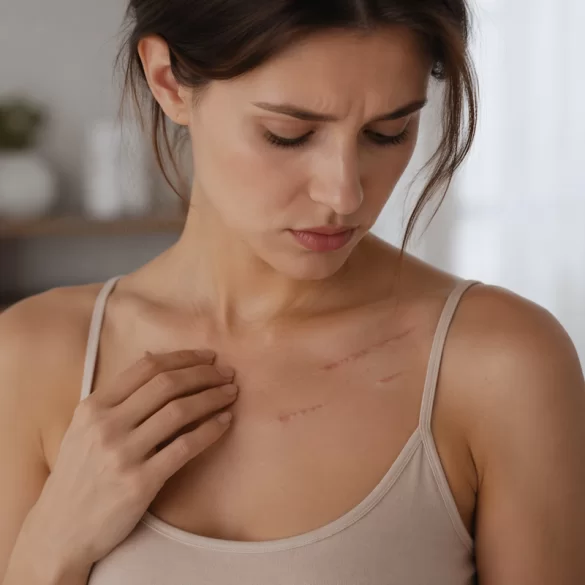
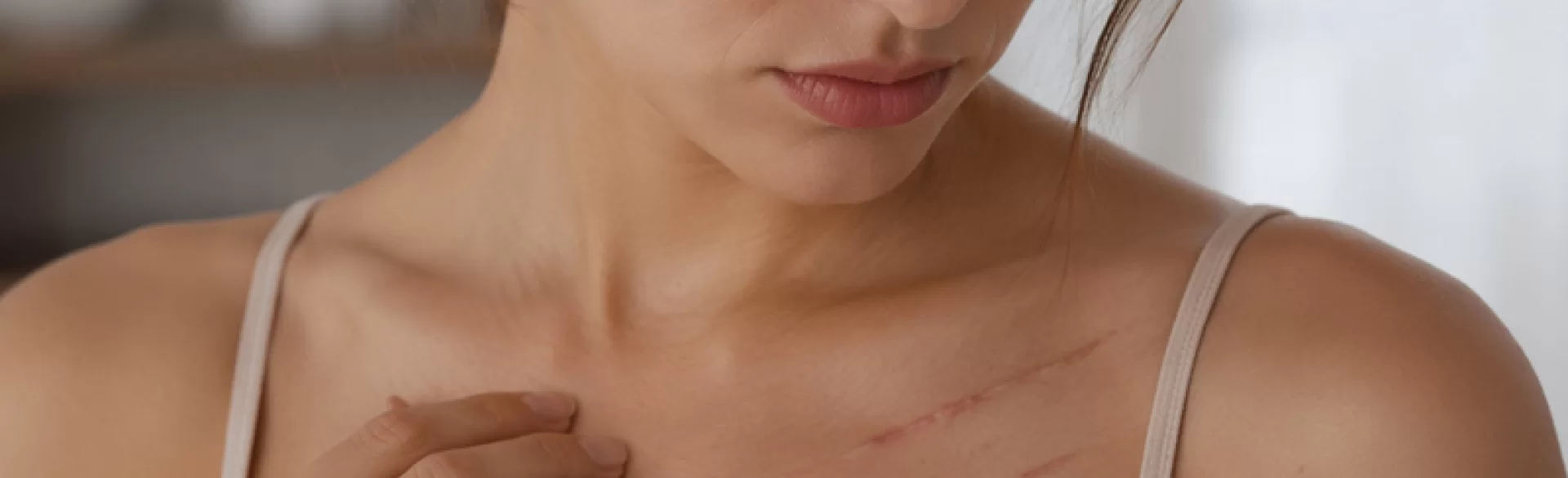
Scars on the cleavage are permanent skin lesions resulting from damage to the dermis and a disrupted regeneration process. As a result of healing, the normal skin structure is replaced by fibrous tissue with a different structure and biomechanical properties. The décolletage is an area particularly predisposed to the formation of visible scars due to thin skin, a limited number of sebaceous glands, high exposure to ultraviolet radiation, and constant tissue tension in the sternal area. These changes can be aesthetic but also functional in nature, affecting skin elasticity and patient comfort.
Scars on the cleavage – what they look like
The clinical presentation of scars on the décolletage is varied and depends on the depth of skin damage, the course of the inflammatory process, and the individual predispositions of the body. Scars may vary in color, structure, and the degree of elevation relative to the surrounding skin.
The following types of scars are distinguished:
- take the form of depressions below the skin level,
- are the result of collagen tissue loss,
- most often occur after acne lesions or chronic inflammation.
- are raised, hard, and limited to the area of the original injury,
- may undergo partial regression over time,
- often appear after injuries or surgical procedures.
3. Keloids
- exceed the boundaries of the original wound,
- show a tendency to grow,
- may cause itching, pain, or a feeling of tension,
- are particularly frequently located in the sternum area.
4. Hyperpigmented and hypopigmented scars
- may take a red, brown, or lighter color than the surrounding skin,
- are the result of melanocyte activity disorders during healing.
A characteristic feature of scars in this area is their greater visibility resulting from:
- thin skin structure,
- limited lipid regeneration,
- chronic exposure to UV radiation,
- continuous stretching of the skin during chest movement.
Scars on the cleavage – causes
Scar formation is a physiological element of the skin repair process, including the inflammatory, proliferative, and tissue remodeling phases. Disturbances in any of these stages can lead to abnormal scarring.
The main causes of scar formation on the décolletage include:
1. Skin inflammations
- inflammatory and cystic acne,
- folliculitis,
- purulent lesions.
Chronic inflammation leads to the degradation of collagen and elastin fibers, which promotes the formation of atrophic or hypertrophic scars.
2. Mechanical injuries
- cuts,
- abrasions,
- skin damage resulting from scratching or pressure.
Damage to the dermis initiates the repair process, which may proceed abnormally.
3. Surgical and dermatological procedures
- removal of skin lesions,
- biopsies,
- operations within the chest area.
In this location, skin tension is particularly significant, which increases the risk of hypertrophic scar formation.
4. Burns and thermal injuries
Thermal injuries often involve deeper layers of the skin, which increases the risk of permanent changes.
5. Individual predispositions
- tendency for keloid formation,
- hormonal disorders,
- chronic diseases affecting healing.
Factors intensifying scarring also include:
- exposure to UV radiation,
- wound infection,
- nutrient deficiencies,
- improper care during the healing period.
Scars on the décolletage – how to remove
Complete scar removal is not possible; however, modern medicine allows for a significant improvement in its appearance through tissue remodeling, stimulation of collagen synthesis, and evening out skin tone. The choice of therapeutic method depends on the type of scar, its age, and depth.
The most commonly used methods include:
1. Fractional laser therapy
Fractional lasers cause controlled skin micro-damage, initiating the process of regeneration and collagen remodeling. Effects include:
- smoothing the skin surface,
- reduction of scar depth,
- improvement of skin tone.
2. Microneedling (microneedle mesotherapy)
The technique, which involves performing numerous micro-punctures, stimulates fibroblasts to produce new collagen fibers. It is particularly effective in treating atrophic scars.
3. Microneedle radiofrequency
It combines microneedling with the action of radio wave energy, which leads to the contraction of collagen fibers and their remodeling. It improves:
- skin tension,
- its density and structure.
4. Biostimulating therapies
- platelet-rich plasma (PRP),
- tissue biostimulators,
- preparations stimulating skin regeneration.
These treatments activate natural repair processes and accelerate tissue remodeling.
5. Surgical treatment
Used in the case of large or pathological scars (e.g., keloids). It consists of their excision and re-suturing, taking into account the minimization of skin tension.
The best therapeutic effects are achieved through combined therapies, which connect different methods to simultaneously influence the structure, color, and elasticity of the skin.
Scars on the décolletage – prevention and care
Scar prevention plays a key role, especially in individuals prone to abnormal healing. Proper management during the healing stage can significantly reduce the risk of permanent changes.
The most important principles include:
1. Sun protection
- using SPF 50 filters,
- avoiding exposure to UV radiation,
- mechanical protection (clothing).
UV radiation intensifies inflammatory processes and leads to scar discoloration.
2. Proper wound care
- maintaining appropriate moisture in the healing environment,
- using regenerating products,
- avoiding irritation and injuries.
3. Supportive therapies
- silicone gels and dressings,
- products supporting collagen synthesis,
- early implementation of dermatological therapy.
4. Avoiding risk factors
- mechanical skin damage,
- scratching inflammatory lesions,
- uncontrolled exposure to heat and chemicals.
Early therapeutic intervention and proper care are the basis for reducing the visibility of scars and improving the quality of the skin on the cleavage.

